Most homeowners in Akron don’t think about surge protection until something gets fried.
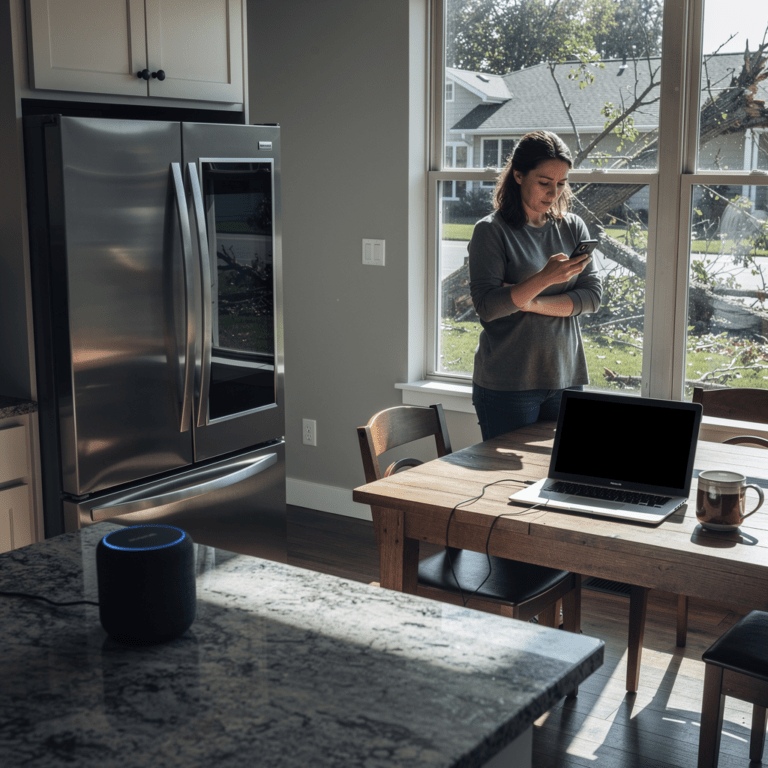
A lightning storm rolls through Summit County, the power flickers a few times, and the next morning your smart TV won’t turn on, your refrigerator is acting strange, or your HVAC thermostat is completely dead. You replace the appliance, chalk it up to bad luck, and move on.
But here’s what most people don’t know: the lightning bolt itself rarely causes the damage. It’s the invisible surge of voltage that travels through your home’s wiring in the seconds after – and it can silently degrade your electronics and appliances over time, long before anything stops working completely.
Whole home surge protection is one of the most practical, most overlooked upgrades an Akron homeowner can make. This guide explains exactly what it is, why Northeast Ohio homeowners have extra reason to care, and how it actually works.
What Is a Power Surge, Really?
Your home’s electrical system is designed to deliver a steady, consistent voltage – in the U.S., that’s 120 volts for standard circuits. A power surge is any sudden spike above that normal level.
Surges can last a fraction of a millisecond. You’ll never see them, hear them, or feel them. But your electronics do.
High-end modern appliances – smart TVs, refrigerators with digital displays, HVAC systems, EV chargers, home automation devices – run on sensitive circuit boards that aren’t designed to absorb voltage spikes. Each surge causes a small amount of damage. One large surge, or dozens of small ones over time, can shorten appliance life significantly or kill a device outright.
Where Do Power Surges Actually Come From?
This is the part that surprises most people. Lightning is the dramatic cause that everyone thinks of – but it accounts for a relatively small percentage of the surges that actually damage homes.
Utility switching and grid events
When your electric utility shifts power loads, brings new equipment online, or responds to a grid event, that can send a surge down the line. FirstEnergy, which serves much of Northeast Ohio, operates a massive regional grid – and the more demand on the grid, the more opportunity for voltage irregularities to travel into your home.
Large appliances cycling on and off
Your central air conditioner, refrigerator compressor, sump pump, and furnace motor all draw significant power when they start up. That startup draws a burst of energy that can create small but damaging internal surges – several times a day, every day.
Downed power lines and outages
When power is restored after an outage, the surge of returning electricity can be intense. This is why so many appliances die right after the power comes back on – not during the outage itself.
Lightning nearby – not just direct strikes
A lightning strike doesn’t have to hit your home directly to cause damage. A strike in your neighborhood, on a nearby utility pole, or even to the ground near your home can send a surge through your electrical system.
Northeast Ohio gets meaningful storm activity year-round – summer thunderstorms, spring electrical storms, and ice storms that take down lines and cause restoration surges. For Akron homeowners, this isn’t a theoretical risk. It’s a seasonal reality.
The Difference Between a Power Strip Surge Protector and Whole Home Surge Protection
Most people own at least one power strip with a built-in surge protector. They’re better than nothing. But they have real limitations that homeowners often don’t realize.
Power strip surge protectors:
- Only protect what’s plugged into them – nothing else in your home
- Wear out silently over time with no visible indication they’ve stopped working
- Offer no protection to hardwired appliances like your HVAC system, water heater, or refrigerator
- Provide no protection from surges entering through cable lines or phone lines
- Typically absorb one large surge before they’re spent – but most keep the little indicator light green anyway
Whole home surge protection:
- Installs at your main electrical panel and intercepts surges before they reach any device in your home
- Protects every outlet, every circuit, every hardwired appliance – including your HVAC, well pump, EV charger, and anything else connected to your electrical system
- Is installed by a licensed electrician and designed to last for years
- Often includes secondary protection for cable and phone line entry points
- Works silently in the background – you’ll never think about it again
Think of it as the difference between wearing a rain jacket on one arm versus installing a roof.
The most effective approach is actually both – a whole home device at the panel plus quality surge-protected power strips at your most sensitive electronics. That layered approach gives you the strongest protection against both large external surges and smaller internal ones.
What’s Actually at Stake in a Modern Akron Home
A decade ago, a power surge might take out a television. Today, the exposure is dramatically higher – because everything in a modern home is “smart.”
Consider what’s potentially at risk in a typical Northeast Ohio home:
- Central HVAC system with digital controls
- Smart refrigerator, dishwasher, and range
- Home office computers, monitors, and networking equipment
- Smart home devices – thermostats, security systems, video doorbells
- Washer and dryer with digital controls
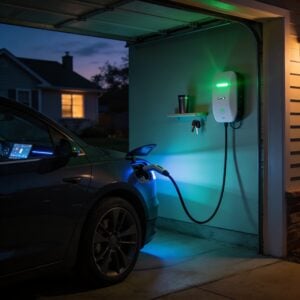
- EV charger (a significant investment in its own right)
- Medical devices and home health equipment
- Whole home audio or entertainment systems
When you add it up, the electronics in a modern home easily represent tens of thousands of dollars in replacement value. Whole home surge protection is a fraction of that investment.
If you’ve already invested in an EV charging station or a whole home generator, surge protection is a natural complement to both. It’s worth protecting what you’ve already put into your home’s electrical infrastructure.
What the Installation Process Looks Like
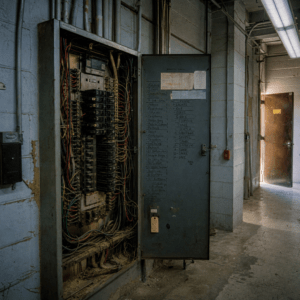
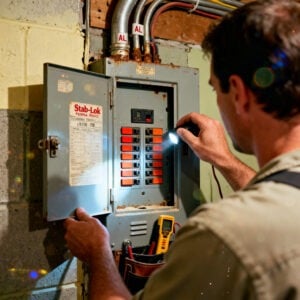
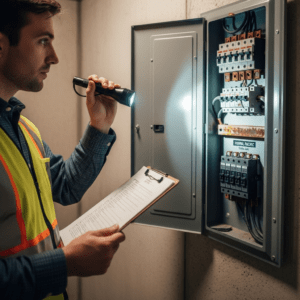
Whole home surge protection is not a DIY project. The device installs directly at your main electrical panel, which means working inside the panel – something that should only be done by a licensed electrician.
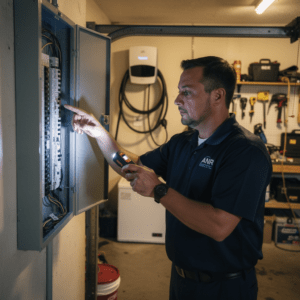
A licensed electrician will:
- Assess your current panel to confirm it can accommodate the device
- Select the right surge protection device (SPD) for your home’s service size
- Install the SPD inside or adjacent to your main panel
- Test it to confirm it’s operating correctly
- Note the manufacturer’s warranty – many quality SPDs include connected equipment warranties
The job typically takes a couple of hours. You don’t need to leave your home, and it doesn’t require a full day of disruption.
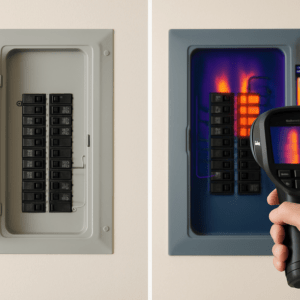
One important note: if your electrical panel is older or already showing signs of strain, it’s worth having your electrician evaluate it at the same time. A surge protector installed in a compromised panel doesn’t do much good – and you may need to address the panel first.
Does Homeowner’s Insurance Cover Surge Damage?
Sometimes – but often not as much as you’d expect. Many standard homeowner’s insurance policies in Ohio have specific exclusions or sub-limits for “equipment breakdown” or surge-related losses. Deductibles frequently exceed the cost of individual damaged items, meaning small-to-mid surge losses often go unrecovered.
Whole home surge protection can actually support insurance claims by providing documentation that a proper protective device was installed – and some insurers offer discounts for homes with surge protection in place. Check with your insurer, but don’t count on a claim to cover what prevention could have avoided.
ANR Electric Installs Whole Home Surge Protection Throughout Northeast Ohio
Our licensed electricians serve Akron, Cuyahoga Falls, Stow, Hudson, Fairlawn, Barberton, Tallmadge, and the surrounding communities throughout Summit County and Portage County. We install surge protection devices as standalone projects or in combination with panel upgrades and other electrical work.
Contact ANR Electric to schedule a surge protection consultation: anrelectricco.com/contact-us
Frequently Asked Questions about Whole Home Surge Protection
Does whole home surge protection really work?
Yes – when properly installed by a licensed electrician, a whole home surge protection device intercepts voltage spikes before they reach your home’s circuits and appliances. It won’t prevent every possible electrical problem, but it significantly reduces the risk of surge-related damage to everything in your home, including hardwired appliances that a standard power strip can’t protect.
How much does whole home surge protection cost in Ohio?
The installed cost varies depending on your panel configuration and the device selected, but it is generally considered one of the more affordable electrical upgrades relative to the value it protects. Compared to replacing a single HVAC system, refrigerator, or set of home office electronics, the investment is modest. Contact ANR Electric for a quote specific to your home.
Do I still need surge protector power strips if I have whole home protection?
A layered approach is ideal. Whole home protection handles large external surges at the panel level. Power strip surge protectors at your most sensitive electronics add a second layer of defense against smaller internal surges. Together, they provide stronger protection than either alone.
What appliances does whole home surge protection cover?
Everything connected to your home’s electrical system – including hardwired appliances like HVAC systems, water heaters, well pumps, EV chargers, and anything else that runs on your home’s circuits. This is the key advantage over power strips, which only protect what’s directly plugged into them.
Can lightning actually damage my home’s electronics if it doesn’t strike directly?
Yes. A nearby lightning strike – on a utility pole, in your yard, or even in your neighborhood – can send a powerful surge through the utility grid and into your home’s wiring. Direct strikes are dramatic and rare; indirect surge damage from nearby lightning is much more common and still very destructive.
Does whole home surge protection replace my homeowner’s insurance?
No – they serve different purposes. Insurance is there to help you recover after a loss. Surge protection is designed to prevent the loss in the first place. Many homeowners find that their insurance deductibles exceed the value of individual damaged items, which means surge protection can save you more in practice than a claim would.
How long does whole home surge protection last?
Quality surge protection devices are built for long-term use, but they can be degraded or spent after absorbing a particularly large surge. Most quality devices include indicator lights or alarms that alert you when the device has been compromised and needs replacement. A licensed electrician can inspect yours as part of routine electrical maintenance.
Can I install whole home surge protection myself?
No – this is not a DIY project. The device installs inside your main electrical panel, which involves live wiring and carries serious safety risks if handled incorrectly. Improper installation can also void the device’s warranty. Always use a licensed electrician for panel-level work.