Most homeowners never think about their home’s wiring. It’s hidden behind walls, it works invisibly, and as long as the lights come on, it’s easy to assume everything is fine.
But wiring doesn’t last forever. It degrades, it gets overloaded, and in older homes, it may never have been adequate in the first place. In Akron and throughout Northeast Ohio – where a large portion of the housing stock was built before 1980 – outdated or deteriorating wiring is one of the most common and most underestimated safety issues we see.
The difficulty is that wiring problems are mostly invisible. You can’t see behind your walls. But there are signs, patterns, and home history clues that tell a clear story about whether your home’s wiring deserves a closer look.
This guide walks you through what to watch for, what different types of wiring mean for your safety, and when to have a licensed electrician take a look.
Why Wiring Ages – and Why It Matters
Electrical wiring isn’t like plumbing that visibly leaks or a roof you can see deteriorating. It fails quietly.
Over decades, wire insulation dries out, cracks, and becomes brittle. Connections at outlets, switches, and junction boxes loosen slightly as your home expands and contracts with Northeast Ohio’s seasons. Rodents occasionally chew insulation in attics and crawl spaces. And older wiring systems – designed for the electrical loads of the 1950s and 60s – weren’t built to handle the demands of a modern home.
The National Fire Protection Association consistently identifies electrical failures and malfunctions as one of the leading causes of home fires in the U.S. The majority of those fires start inside walls – not at an outlet you can see, but at a connection, a splice, or a stretch of degraded wire hidden from view.
Warning Signs Your Home’s Wiring May Need Attention
You don’t need to open your walls to get clues about your wiring’s condition. Your home will tell you things if you know what to listen for.
Lights that flicker or dim when appliances run
When your lights dim every time the refrigerator kicks on or the washing machine starts, it usually means circuits are overloaded or connections are loose somewhere in the system. Occasional, slight dimming is fairly normal – frequent, pronounced flickering is worth investigating.
Outlets or switches that are warm to the touch
A properly functioning outlet or switch should be room temperature. Warmth – especially without anything plugged in – suggests the connection behind it is struggling, arcing, or overloaded. This is a fire risk that should be addressed promptly.
Burning smell with no visible source
Electrical burning has a distinct, acrid smell – different from food or candles. If you catch a whiff anywhere in your home, especially near outlets, the electrical panel, or in a specific room, take it seriously. Turn off the circuit if you can identify it, and call an electrician. Don’t wait.
Frequently tripping breakers or blown fuses
A breaker that trips repeatedly is sending a signal. Sometimes it’s about load. Sometimes it’s about the wiring itself. Either way, it’s not something to dismiss.
Outlets that don’t work, spark, or have scorch marks
Dead outlets are sometimes just a tripped GFCI upstream – easy to reset. But an outlet that sparks when you plug something in, or shows any discoloration or black marks, has a problem that needs to be opened and inspected.
Your home is more than 40 years old and has never had an electrical inspection
If your home was built before 1985 and the wiring has never been professionally evaluated, that alone is a reason to schedule an inspection. Not because something is definitely wrong – but because you simply don’t know.
Older Wiring Types Common in Akron-Area Homes
If your home was built in a certain era, the type of wiring inside your walls matters enormously. Here’s what to know about the most common older wiring types found in Northeast Ohio homes.
Knob-and-Tube Wiring (homes built before ~1950)
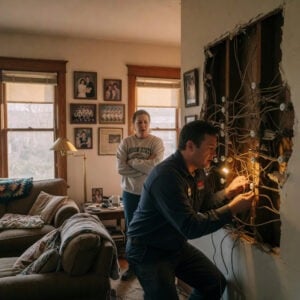
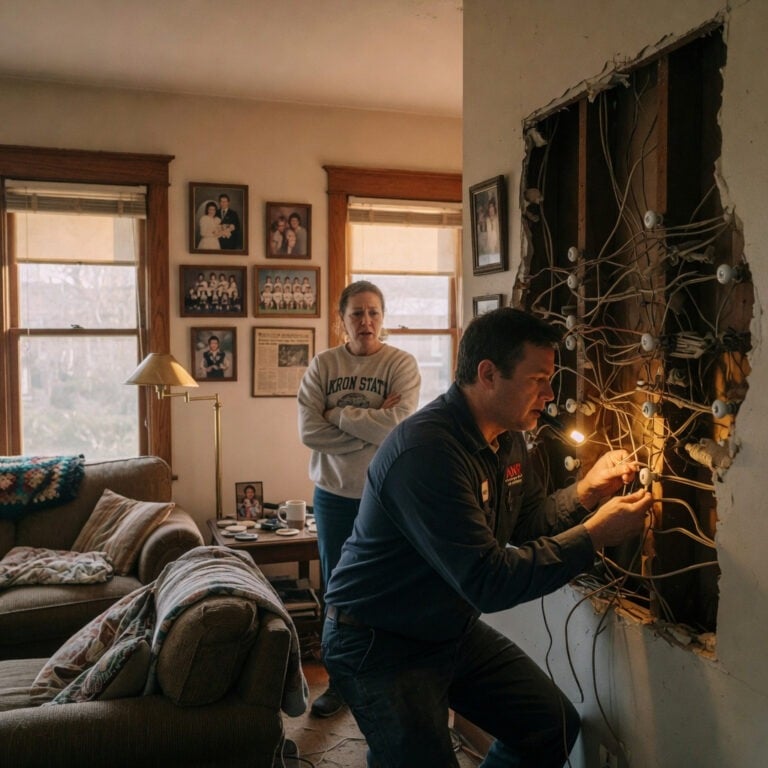
Knob-and-tube is the oldest residential wiring system still found in some Akron-area homes. It was the standard from the late 1800s through roughly the 1940s. The system uses separate hot and neutral wires run through ceramic knobs and tubes, with no ground wire at all.
The issues with knob-and-tube today:
- The insulation is cotton and rubber – materials that become extremely brittle and fragile after 70+ years
- It was designed for electrical loads a fraction of what modern homes use
- It has no ground wire, meaning it can’t support modern three-prong outlets or modern appliances safely
- Previous generations of homeowners often modified knob-and-tube improperly when adding circuits
- Most home insurers in Ohio will not issue or renew policies on homes with active knob-and-tube wiring
If your older Akron home has knob-and-tube wiring that’s still active – meaning it’s still carrying current – that’s a conversation to have with a licensed electrician right away.
Aluminum Branch Circuit Wiring (homes built 1965-1973)
During the mid-to-late 1960s, aluminum was widely used for branch circuit wiring in residential homes because copper prices spiked. The problem is that aluminum expands and contracts at a different rate than the copper connections and outlets it terminates at. Over time, those connections loosen – and loose connections arc, generate heat, and start fires.
The U.S. Consumer Product Safety Commission has documented that homes with aluminum branch circuit wiring are significantly more likely to experience dangerous wiring conditions than homes with copper. If your home was built between 1965 and 1973, it may have this wiring. See our dedicated guide to aluminum wiring safety in Northeast Ohio homes for remediation options that don’t necessarily require full rewiring.
Two-Prong Ungrounded Outlets
Two-prong outlets are a sign that your wiring lacks a ground wire – which is the safety wire that protects you and your electronics if something goes wrong. Using adapters is a common workaround, but it doesn’t actually provide the grounding protection modern devices need.
What a Home Electrical Inspection Actually Covers
A professional electrical inspection isn’t the same as a home inspection. A home inspector takes a general overview of your home’s systems. A licensed electrician doing a dedicated electrical inspection goes significantly deeper.
What you can typically expect:
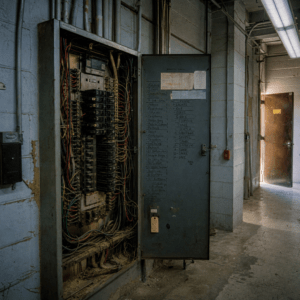
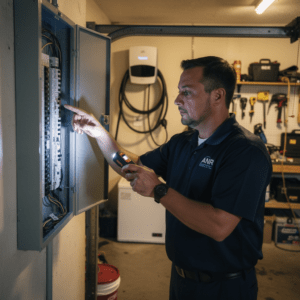
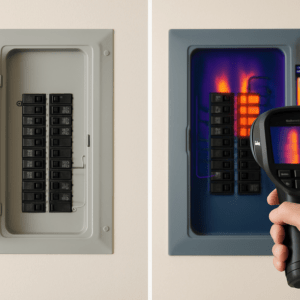
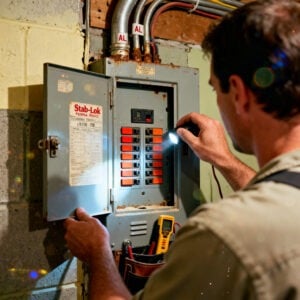
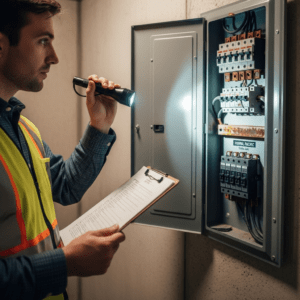
- Panel inspection: evaluating the condition, capacity, and safety of your main electrical panel, including checking for double-tapped breakers, improper wiring, and signs of heat damage
- Visible wiring assessment: checking accessible areas like the attic, basement, and crawl space for wiring condition, improper splices, missing junction box covers, and signs of damage
- Outlet and switch testing: checking for proper grounding, GFCI protection where required, and signs of arcing or damage
- Load assessment: evaluating whether your current system can safely support your home’s actual electrical usage
When Rewiring Is the Answer
Full home rewiring sounds like a major undertaking, and it can be – but it’s also far less disruptive than most homeowners expect when done by experienced electricians. Modern techniques allow for much of the work to be done through walls without opening every surface.
If a full rewire isn’t the right call right now, there are targeted options: updating specific circuits, replacing outdated outlets throughout the home, installing GFCI and AFCI protection at key points, and addressing specific identified problem areas. A licensed electrician can help you prioritize what makes the biggest difference for your specific home.
Our team serves homeowners throughout Akron, Stow, Cuyahoga Falls, Hudson, Barberton, Fairlawn, and surrounding communities. Our residential electrical services include wiring inspections, targeted upgrades, and full rewires for older Northeast Ohio homes.
Don’t Wait for Something to Go Wrong
The honest reality about home wiring is this: if something goes wrong with it, you’ll know – but you may not find out until it’s a problem. The most dangerous electrical failures happen inside walls, at connections you can’t see, while you’re asleep or at work.
A proactive inspection costs far less than a disaster. Contact ANR Electric to schedule a wiring inspection in Akron or anywhere in Northeast Ohio: anrelectricco.com/contact-us
Frequently Asked Questions About Home Wiring
How do I know if my home has knob-and-tube wiring?
The most reliable way is to have a licensed electrician inspect your attic, basement, and accessible wall cavities. Knob-and-tube wiring uses individual ceramic knobs to anchor wires and ceramic tubes where wires pass through framing. If your home was built before 1950, there’s a real possibility it’s present.
Is old wiring automatically dangerous?
Not automatically – but age significantly increases risk. Wiring insulation degrades over time, connections loosen, and older systems were designed for far lower electrical loads than modern homes require. Age alone warrants an inspection.
How often should a home’s electrical system be inspected?
Most electrical industry organizations recommend an inspection every 10 years for homes under 40 years old, and every 5 years for older homes. You should also schedule an inspection after any significant storm damage, if you notice any warning signs, before or after a major renovation, or when buying or selling a home.
Can I have my wiring inspected without a major renovation?
Yes. A wiring inspection doesn’t require opening walls throughout your home. A licensed electrician can evaluate accessible areas – attic, basement, crawl space – test all outlets, inspect the panel, and give you a clear picture of your wiring’s condition without major disruption.
What’s the difference between an electrician’s inspection and a home inspection?
A home inspector takes a broad, general view of all your home’s systems. An electrician’s dedicated electrical inspection goes much deeper into the electrical system specifically, including testing, wiring type identification, load assessment, and a detailed evaluation of the panel.
Does homeowner’s insurance cover homes with knob-and-tube wiring?
Many insurance carriers in Ohio will not insure a home with active knob-and-tube wiring, or will charge significantly higher premiums. If you’re buying a home and the inspection reveals knob-and-tube, your insurance options – not just your safety – are a real consideration.
My house is from the 1970s – should I be worried about my wiring?
Not necessarily worried, but definitely aware. Homes from the 1965-1973 period may contain aluminum branch circuit wiring, which carries documented fire risks. Homes from the 1970s also typically have wiring that’s now 50+ years old. An inspection will tell you specifically what you have and whether any updates are warranted.
What are arc fault circuit interrupters (AFCIs) and do I need them?
AFCIs are a type of circuit breaker that can detect dangerous electrical arcing – the kind of sparking inside walls that standard breakers can’t detect and that causes many home electrical fires. Ohio adopted the 2023 National Electrical Code in 2024, which requires AFCI protection in new construction and certain remodel scenarios. Older homes without AFCI protection can benefit significantly from having them installed.