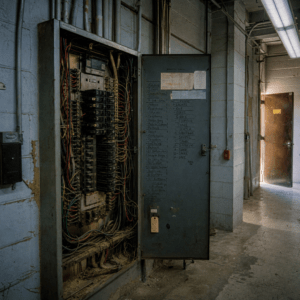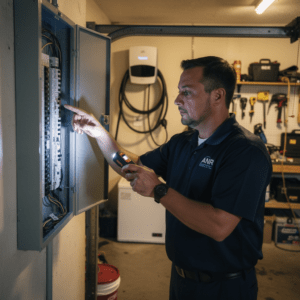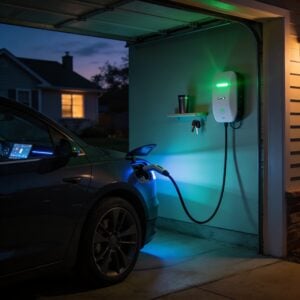
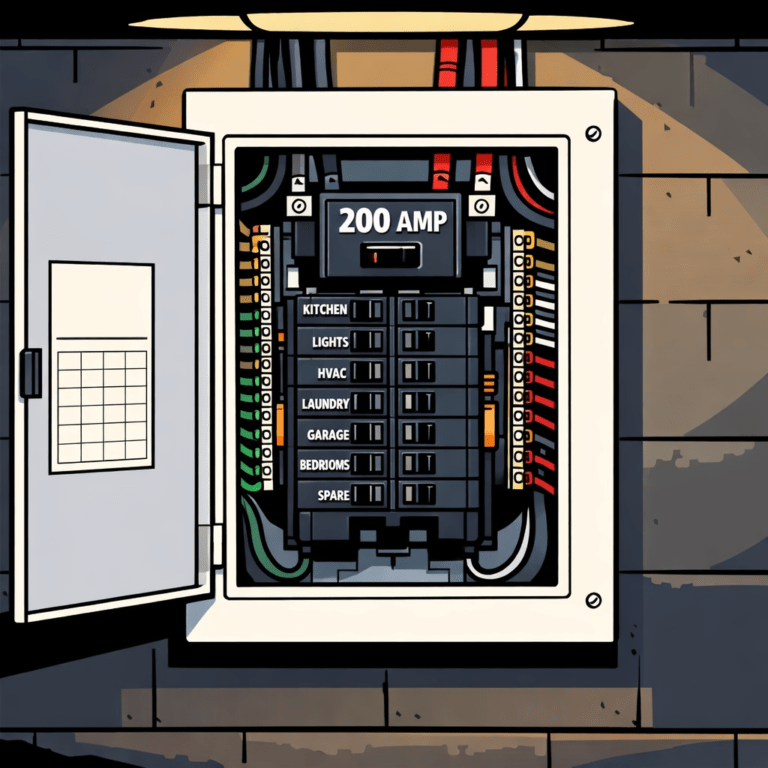
Your home’s electrical panel is the heart of your electrical system, distributing power to every outlet, appliance, and light fixture throughout your house. For many homeowners in Akron and Northeast Ohio, older electrical panels struggle to keep up with modern power demands—and that can create both inconvenience and serious safety concerns. When does your home need an electrical panel upgrade?
Understanding Your Electrical Panel
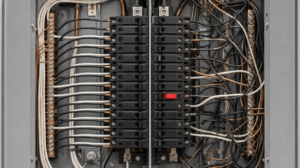
Your electrical panel (also called a breaker box or service panel) receives electricity from the utility company and divides it into separate circuits throughout your home. The panel’s capacity is measured in amperes, or “amps,” which indicates how much electrical current it can safely handle at one time.
Common Panel Sizes in Northeast Ohio Homes
60-Amp Panels: Found in older homes built before the 1960s, these panels were designed when homes had far fewer electrical devices. Most modern homes require significantly more capacity.
100-Amp Panels: Common in homes built from the 1960s through the 1990s, these panels can handle basic electrical needs but often struggle with today’s power demands—especially if you’re adding modern appliances or an electric vehicle charger.
200-Amp Panels: The current standard for new homes and the recommended capacity for most modern households. A 200-amp panel provides enough capacity to power multiple high-demand appliances simultaneously while leaving room for future additions.
Clear Signs Your Home Needs an Electrical Panel Upgrade
1. Frequently Tripping Circuit Breakers
If you’re constantly resetting breakers after they trip, your electrical system is telling you it’s overloaded. While an occasional trip is normal (breakers are designed to protect your home), frequent trips indicate your panel can’t handle your home’s electrical load.
2. Flickering or Dimming Lights
Do your lights dim when you turn on the microwave or washing machine? This is a classic sign that your electrical panel is struggling to distribute enough power to all your circuits at once.
3. Buzzing or Crackling Sounds from the Panel
A properly functioning electrical panel should be silent. Buzzing, humming, or crackling sounds can indicate loose connections or failing components—both serious safety hazards that require immediate attention from a licensed electrician.
4. Warm or Hot Panel
Your electrical panel should never feel warm or hot to the touch. If it does, this is an urgent warning sign of an overloaded system that could pose a fire risk.
5. Using Multiple Power Strips and Extension Cords
If you’re relying heavily on power strips and extension cords because you don’t have enough outlets—or because using too many appliances at once trips breakers—your electrical system can’t support your needs.
6. You’re Adding High-Power Appliances or Features
Planning to install any of these items? Your current panel may not have the capacity:
- Electric vehicle (EV) charging station
- Central air conditioning
- Home generator
- Hot tub or swimming pool
- Multiple major kitchen appliances
- Home office equipment
- Electric water heater
- Heat pump system
7. Your Home Still Has a Fuse Box
If your home has a fuse box rather than circuit breakers, it’s definitely time for an electrical panel upgrade. Fuse boxes are outdated technology that typically provide only 60 amps of service—far below what modern homes require.
8. Visible Rust or Corrosion on the Panel
Any signs of rust, corrosion, or burn marks on your electrical panel indicate potential safety issues and the need for replacement.
Why Electrical Panel Capacity Matters
Many homeowners don’t realize that electrical panels have a built-in safety limitation. As a general rule, you should only use 80% of your panel’s rated capacity. This means:
- A 100-amp panel safely provides only about 80 amps
- A 200-amp panel safely provides only about 160 amps
This safety buffer prevents overheating and reduces fire risk. If your home is consistently operating near or at capacity, it’s time to upgrade.
The Benefits of Upgrading to a 200-Amp Panel
Enhanced Safety
Modern 200-amp panels include updated safety features that significantly reduce the risk of electrical fires. They’re designed to handle the electrical demands of contemporary homes without overheating or creating dangerous conditions.
Support for Modern Appliances
Today’s homes rely on numerous high-power devices that simply weren’t common when many older panels were installed. An electrical panel upgrade to a 200-amp panel ensures you can safely power:
- Multiple computers and home office equipment
- Smart home devices
- Energy-efficient HVAC systems
- Electric vehicle chargers
- Kitchen appliances (refrigerators, dishwashers, microwaves, electric ranges)
- Entertainment systems
- Laundry equipment
Room for Future Expansion
A 200-amp panel provides capacity for home additions, kitchen remodels, finished basements, or other upgrades without requiring another panel replacement.
Improved Home Value
An upgraded electrical system is an attractive feature for potential buyers. Many home inspections flag outdated electrical panels as concerns, and having a modern 200-amp service removes this obstacle if you decide to sell.
Lower Insurance Costs
Some insurance companies charge higher premiums for homes with outdated electrical systems or may even decline coverage. An electrical panel upgrade to a modern panel can potentially reduce your insurance costs.
Fewer Power Outages
With adequate electrical capacity, you won’t experience circuit breaker trips or power interruptions when multiple appliances are running simultaneously.
When Electrical Panel Upgrades Are Required by Code
In Ohio, electrical panel upgrades are required in certain situations:
- When adding circuits that would exceed your current panel’s capacity
- During major renovations that significantly increase electrical load
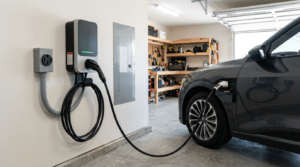
- When installing high-demand equipment like EV chargers (in many cases)
- If your current panel is damaged or doesn’t meet current safety standards
- When adding square footage to your home
Ohio adopted the 2023 National Electrical Code (NEC) in April 2024 The NEC is published by the National Fire Protection Association and sets the standards for electrical safety in residential and commercial buildings.
What to Expect During an Electrical Panel Upgrade
An electrical panel upgrade is a complex project that requires a licensed electrician. Here’s the typical process:
Step 1: Professional Assessment
A licensed electrician will inspect your current electrical system, calculate your home’s power needs, and determine the appropriate panel size for your situation.
Step 2: Permit Acquisition
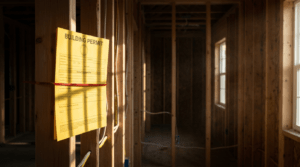
Your electrician will obtain the necessary permits from your local building department. In Akron and Summit County, this ensures your upgrade meets all local codes and safety requirements.
Step 3: Utility Coordination
The utility company (such as FirstEnergy in the Akron area) will need to disconnect power to your home during the installation. This typically takes several hours.
Step 4: Panel Installation
Your electrician will:
- Remove the old panel
- Install the new 200-amp panel
- Update the meter socket if needed
- Connect all existing circuits to the new panel
- Install any additional circuits if required
- Ensure all connections meet code requirements
Step 5: Inspection
A local building inspector will verify that the work was completed properly and meets all safety codes.
Step 6: Power Restoration
Once inspection is complete, the utility company will restore power to your home.
Cost Considerations
While costs vary based on your specific situation, upgrading from a 100-amp to 200-amp service typically ranges from $1,500 to $4,000 in the Akron area. Factors that affect cost include:
- Distance from your home to the utility transformer
- Whether the meter socket needs replacement
- Amount of rewiring required
- Additional circuits needed
- Local labor rates
- Required permits and inspection fees
Keep in mind that this is an investment in your home’s safety, functionality, and value. While the upfront cost may seem significant, it’s far less expensive than dealing with electrical fires, damaged appliances, or the inability to use modern conveniences in your home.
Frequently Asked Questions About Electrical Panel Upgrades
Q: How long does an electrical panel upgrade take?
A: Most panel upgrades can be completed in one day. Your power will typically be off for 4-8 hours during the installation.
Q: Can I upgrade the panel myself to save money?
A: No. Electrical panel work is dangerous and must be performed by a licensed electrician. DIY electrical work is illegal in most jurisdictions and can void your homeowner’s insurance. Working with electricity can be fatal—this is not a project for homeowners.
Q: Will I need to upgrade my electrical service, or just the panel?
A: This depends on your current setup. If you already have 200-amp service from the utility company but an older 100-amp panel, you may only need to replace the panel. If your service line is also 100 amps, you’ll need a full service upgrade, which involves the utility company and typically costs more.
Q: How long will a new electrical panel last?
A: A properly installed modern electrical panel should last 25-40 years with minimal maintenance.
Q: My home was built in the 1970s. Do I definitely need an upgrade?
A: Not necessarily, but it’s worth having a licensed electrician assess your panel. Many 1970s homes have 100-amp service, which may be adequate if you have gas appliances and don’t plan to add an EV charger or other high-demand equipment. However, if you’re experiencing any of the warning signs listed above, an upgrade is likely needed.
Special Considerations for Northeast Ohio Homes
Older Housing Stock
Many Akron-area neighborhoods feature homes built in the mid-20th century when electrical demands were much lower. If your home was built before 1980, there’s a strong chance your electrical panel could benefit from an upgrade.
Harsh Weather Conditions
Northeast Ohio’s winter weather can place additional demands on your electrical system through space heaters, holiday lighting, and heating systems. A properly sized panel ensures your home can handle these seasonal power needs safely.
Historic Homes
If you own a historic home in neighborhoods like Highland Square or Goodyear Heights, you may have outdated wiring systems like knob-and-tube wiring. These homes often require not just panel upgrades but complete rewiring for safety.
Taking Action: Next Steps
If you’re experiencing any warning signs or if your panel is more than 25 years old, schedule an electrical inspection with a licensed electrician. During this inspection, the electrician will:
- Assess your current electrical capacity
- Calculate your home’s power needs
- Check for safety issues
- Recommend appropriate upgrades
- Provide a detailed estimate
Don’t wait until you experience an electrical emergency or fire. A proactive panel upgrade protects your home, your family, and your investment.
Professional Electrical Panel Services in Akron and Northeast Ohio
At ANR Electric, we’ve been serving Akron, Summit County, and Northeast Ohio since 2011. Our licensed electricians have extensive experience upgrading electrical panels in homes throughout the region—from historic properties to modern builds.
We provide:
- Thorough electrical assessments
- Expert panel installation and upgrades
- Compliance with all local codes
- Coordination with utility companies
- Professional service from start to finish
Whether you’re planning to add an EV charger, experiencing frequent breaker trips, or simply want to ensure your home’s electrical system is safe and adequate, our team can help.
Contact ANR Electric today at (330) 644-4454 to schedule your electrical panel assessment.
This article provides general information about electrical panel upgrades. Every home is unique, and proper assessment by a licensed electrician is essential for determining your specific needs. ANR Electric serves Akron, Canton, Cuyahoga Falls, Stow, Hudson, and surrounding communities in Northeast Ohio.