Commercial electrical systems are built to handle serious demand. But they’re not built to handle that demand forever, especially when the business using the building has grown, changed, or added equipment the original system was never designed for.
The challenge for building owners and facilities managers is that commercial electrical problems are rarely dramatic until they are. The warning signs tend to show up quietly – a breaker that trips more than it should, lights that flicker in one section of the building, a circuit that can’t support a new piece of equipment. Easy to dismiss. Easy to patch around. Until the day when you can’t.
ANR Electric has been serving commercial clients throughout Northeast Ohio since 2011. These are the seven signs we see most often that tell us a commercial electrical system is overdue for professional attention.
1. Your Panel Is Frequently Tripping Breakers
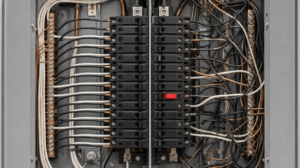
An occasional trip is a circuit protection device working correctly. A pattern of trips – same breakers, recurring schedule, specific equipment – is a system telling you it’s outmatched by the load placed on it.
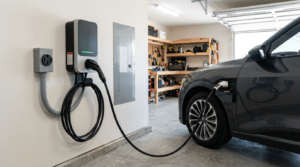
Commercial buildings accumulate electrical load over time. A manufacturing floor that started with basic machinery adds CNC equipment, then a second shift, then automated systems. An office building that originally housed 30 workstations now has 80, plus conference room AV equipment, a server room, and EV charging in the parking structure.
When the load grows faster than the system was designed for, breakers become the early warning system. The solution isn’t resetting them. It’s understanding what they’re telling you.
2. You’re Running on a Panel That’s More Than 25 Years Old
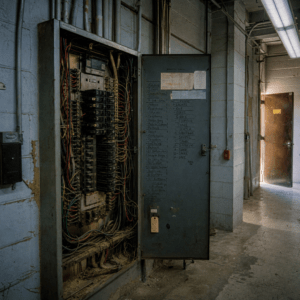
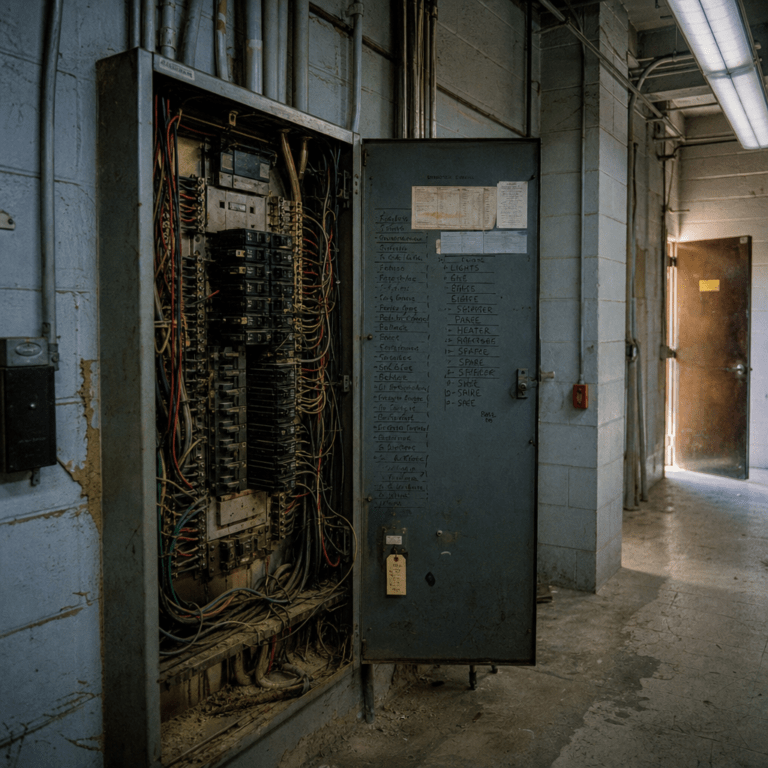
Electrical panels have a functional lifespan. Commercial panels are built more robustly than residential units, but they still age – breaker mechanisms wear, connections loosen over decades of thermal cycling, and bus bar condition degrades.
More practically, a 25-year-old panel was engineered for a 25-year-old facility. It was sized for the electrical demand of that era, with that building’s equipment, before smart building systems, modern HVAC controls, LED lighting retrofits with sophisticated drivers, and the kind of data and communications infrastructure that now lives in nearly every commercial space.
If your building’s panel hasn’t been professionally evaluated in the last decade, that evaluation is overdue. If your panel is original to the building and the building is 30 or more years old, the conversation may be about more than maintenance.
3. You Can’t Add New Equipment Without Tripping Circuits
This is one of the most common calls we get from commercial clients in the Akron area. A business wants to add a piece of equipment – a commercial coffee system, an additional HVAC unit, a welding station, a commercial kitchen appliance – and the circuit can’t support it. So they try the next circuit. Then the next one.
When a commercial building can’t absorb new equipment without a fight, it’s not a wiring problem in isolation. It’s a capacity problem. The system has reached or exceeded what it was designed to deliver.
The right answer isn’t finding a workaround. It’s a capacity assessment and, often, a panel upgrade with additional dedicated circuits to support the facility’s actual operating requirements.
4. Your Lighting Is Flickering, Uneven, or Outdated
Flickering lights in a commercial building are more than an annoyance – they’re a signal. Flickering usually indicates voltage fluctuations, loose connections, or circuits that are being overloaded by other equipment running on the same feed. In a manufacturing or production environment, voltage fluctuations can affect sensitive equipment performance and calibration.
Separate from flickering, many commercial facilities in Northeast Ohio are still operating with fluorescent T8 or T12 lighting systems that are decades old. Modern LED systems use 40 to 60 percent less energy than equivalent fluorescent systems, produce better quality light, require far less maintenance, and carry much longer rated lifespans. We cover the commercial lighting picture in detail as part of our commercial electrical services for Northeast Ohio businesses.
5. You’re Experiencing Unexplained Equipment Failures or Downtime
Sensitive commercial equipment – CNC machines, medical devices, food processing equipment, data servers, telecommunications systems – is vulnerable to power quality issues that a basic panel inspection won’t reveal.
Voltage sags, harmonic distortion, and micro-surges can stress and degrade precision equipment over time without tripping a single breaker or showing any visible sign. If your facility is experiencing unexplained equipment failures, shortened component life, or electronic malfunctions with no clear mechanical cause, power quality is worth investigating.
Power quality issues are distinct from the kind of surge protection that a whole-facility surge protection device addresses – though that’s often part of the solution. Our whole-home surge protection guide explains the fundamentals, and the same principles apply at commercial scale.
6. Your Electrical System Hasn’t Been Formally Inspected in More Than 5 Years
Commercial electrical systems should be professionally inspected on a regular schedule. The NFPA 70B standard (Recommended Practice for Electrical Equipment Maintenance) outlines maintenance intervals for commercial electrical equipment, and most commercial insurers expect documented maintenance histories for facilities with significant electrical infrastructure.
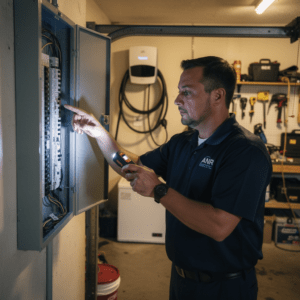
A formal inspection covers panel condition, connection integrity, grounding and bonding, protective device testing, wiring condition in accessible areas, and compliance with current code requirements. Code doesn’t require existing facilities to continuously upgrade to current standards – but a knowledgeable electrician will flag conditions that represent risk even if they’re technically grandfathered.
Beyond safety, documented inspection history is useful during insurance claims, due diligence for commercial real estate transactions, and tenant negotiations for facilities that house multiple businesses.
7. You’re Planning a Renovation, Expansion, or Change in Use
A change in how a commercial space is used – a retail space converted to a restaurant, a warehouse converted to flex office space, a medical office expanding into an adjacent suite – almost always has electrical implications.
Restaurants require dedicated circuits for commercial kitchen equipment, exhaust hood controls, and refrigeration. Medical offices have specific requirements for isolated ground circuits and emergency power. Manufacturing facilities adding heavy equipment need load calculations and possibly service upgrades.
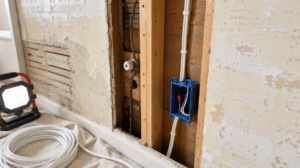
Engaging a licensed commercial electrician before a renovation begins – not after – saves significant time and money. Retrofitting electrical infrastructure through finished walls, ceilings, and floors is expensive. Getting ahead of it during demo and framing is not.
ANR Electric has extensive experience with tenant improvement electrical work throughout the Akron area. We work alongside general contractors and directly with business owners on commercial renovations and expansions. Our team is licensed and insured, NECA-member, and carries Ohio electrical contractor license EL.46490.
What a Commercial Electrical Assessment Covers
When we evaluate a commercial facility, we’re looking at the complete picture – not just the panel. The assessment covers: service entry and metering, main and sub-panel condition and capacity, protective device condition and coordination, grounding and bonding integrity, visible wiring condition and organization, outlet and circuit testing, lighting system condition, emergency and exit lighting functionality, and a load analysis comparing what the system was designed for versus what it’s currently being asked to deliver.
The output is a clear prioritized report. Not everything needs immediate attention. We help facilities teams understand what’s a safety issue, what’s a code compliance issue, and what’s a capacity or efficiency opportunity – so resources go where they matter most.
Contact ANR Electric to schedule a commercial electrical assessment: anrelectricco.com/contact-us
Frequently Asked Questions
How often should a commercial building’s electrical system be inspected?
Most industry guidance and commercial insurer expectations point to a formal electrical inspection every 3 to 5 years for occupied commercial facilities. High-demand facilities – manufacturing, food service, medical – warrant more frequent evaluation. New building purchases should always include a dedicated electrical inspection as part of due diligence.
What are the most common commercial electrical code violations?
The most frequent issues we find in older Northeast Ohio commercial buildings include: overloaded panels with double-tapped breakers, missing or non-functional GFCI protection in required locations, improper wire connections in junction boxes, absent or deteriorated equipment grounding, outdated panels that no longer meet current breaker coordination requirements, and lack of AFCI protection in applicable areas.
Can my business operate during a commercial electrical upgrade?
Often yes, depending on the scope of work and the facility’s layout. Panel upgrades typically require a scheduled outage for the panel work itself, which we coordinate to minimize disruption – often scheduling during evenings, weekends, or planned maintenance windows. Circuit additions and wiring work can frequently be staged around active operations.
What is the difference between a commercial panel upgrade and a service upgrade?
A panel upgrade replaces or expands the main distribution panel – the equipment that distributes power to your circuits. A service upgrade increases the total amperage coming into the building from the utility – from 200A to 400A, for example. Sometimes both are needed together; sometimes only one. The assessment determines which applies to your situation.
Does my commercial building need a permit for electrical work?
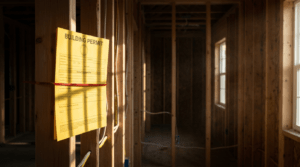
Yes. All commercial electrical work in Ohio requires permits and inspection by the local authority having jurisdiction. Permitted work protects building owners during insurance claims, tenant disputes, and commercial real estate transactions. Work performed without permits creates significant liability exposure and can complicate building sales.
What is NECA and why does it matter for commercial electrical work?
NECA stands for the National Electrical Contractors Association – the leading trade association for the electrical contracting industry. NECA membership reflects a contractor’s commitment to industry standards, ongoing training, and professional practices. ANR Electric is a NECA member and has been serving commercial clients in Northeast Ohio since 2011.
How do I know if my commercial building needs a service upgrade vs. just circuit additions?
A licensed electrician calculates your facility’s total electrical demand versus your current service capacity. If your demand is approaching or exceeding your service rating – or if you’re planning significant equipment additions that would push it past capacity – a service upgrade is on the table. Circuit additions alone solve a different problem: distributing existing capacity to the right locations.
Can aging commercial wiring be a fire hazard?
Yes. Deteriorated insulation, loose connections at termination points, overloaded circuits, and improperly modified wiring are all documented fire causes in commercial buildings. The NFPA consistently identifies electrical failures as among the leading causes of commercial structure fires. A formal inspection is the only reliable way to assess the condition of wiring that’s largely hidden from view.