You bought the electric vehicle – or you’re about to. And now everyone is telling you the same thing: get a Level 2 charger installed at home.
They’re right. But the question most Akron homeowners are actually asking isn’t whether to get a home charger – it’s what does this actually involve, what do I need to have in place, and how do I make sure it’s done right?
This guide gives you a straightforward, no-fluff answer to all of it. We cover the types of home EV chargers, what your electrical system needs to support one, the installation process, and why hiring a licensed electrician matters more than most EV owners realize.
Level 1 vs. Level 2 Charging: The Difference That Actually Matters
Before getting into installation, it helps to understand what you’re actually choosing between.
Level 1 Charging
This is the charging cable that comes with your vehicle. You plug it into a standard 120-volt outlet – the same outlet your phone charger uses – and it works. No installation required.
The catch: Level 1 adds roughly 3 to 5 miles of range per hour of charging. If you drive 40 miles a day, you need 8-12 hours plugged in to recover that range overnight. For modest daily driving, this can work. For most Northeast Ohio drivers who commute on I-77, the Turnpike, or across Summit County, it’s slow enough to be a real inconvenience.
Level 2 Charging
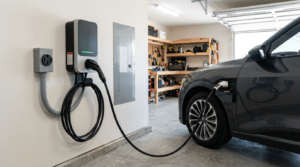
This is what most EV owners who use their vehicle regularly want. A Level 2 charger runs on a dedicated 240-volt circuit – the same voltage as a dryer or electric range – and adds roughly 20 to 30 miles of range per hour of charging.
In practical terms: you plug in when you get home, and you wake up to a full battery. Every morning. That’s the experience Level 2 delivers.
Level 2 is what requires professional installation – because it requires a dedicated 240-volt circuit run to wherever you want the charger mounted, typically the garage.
What Your Home Needs Before Installation Can Happen
This is the part most people don’t know to ask about – and it’s the most important part of the conversation.
A Level 2 EV charger isn’t just a piece of equipment you hang on the wall. It draws consistent, significant power – typically 32 to 48 amps continuously during a charging session. Your home’s electrical system needs to be able to support that demand without compromising the rest of your circuits.
Here’s what a licensed electrician needs to assess before installation:
Panel capacity
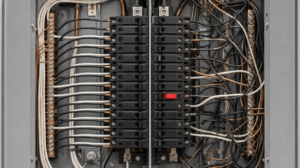
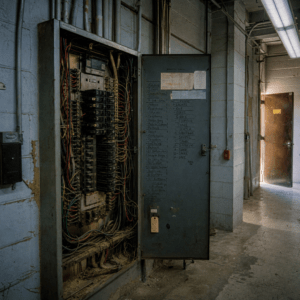
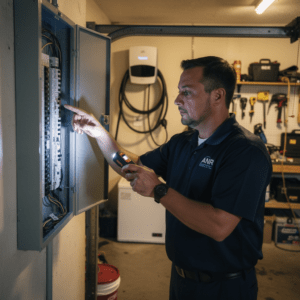
Your main electrical panel needs available capacity to add a new 240-volt circuit. Most panels have a rating – 100 amps, 150 amps, 200 amps – and if you’re already using most of your available capacity, adding a 40 or 50-amp EV circuit may require a panel upgrade first. Older homes in Akron, particularly those built before the 1990s, commonly have 100-amp panels that are already fully loaded with modern appliances.
Distance from panel to charging location
Wire runs affect cost and performance. The farther your garage or charging location is from your main panel, the more materials and labor are involved. In some homes, the panel is on the opposite side of the house from the garage, which affects routing and cost.
Garage wiring and outlet condition
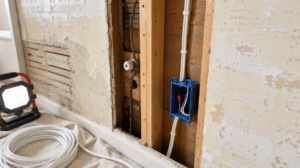
Many garages in older Akron homes have minimal electrical infrastructure – one or two circuits, basic lighting, maybe a single outlet. Adding an EV circuit means new wiring run specifically for that purpose.
Permit requirements
In Akron and throughout Ohio, EV charger installation requires a permit. This isn’t optional, and it’s not just bureaucracy – a permitted installation is inspected, confirmed to meet code, and documented. That matters for your homeowner’s insurance, for any future home sale, and for your own safety. Any electrician who suggests skipping the permit is a red flag.
Choosing the Right EV Charger for Your Home
The EV charging equipment market has expanded dramatically, and there’s a genuine choice to make. Here are the key considerations:
Hardwired vs. plug-in units
Some Level 2 chargers are hardwired directly into your home’s electrical system. Others plug into a 240-volt outlet (like a NEMA 14-50). Hardwired units are typically more permanent, often eligible for higher amperage, and preferred for their clean installation. Plug-in units offer the flexibility of taking the charger with you if you move or change vehicles.
Charging speed (amperage)
A 32-amp charger adds roughly 25 miles per hour of charging. A 48-amp charger adds roughly 35 miles per hour. For most daily drivers, 32 amps is more than sufficient – you’ll still wake up to a full charge every morning. If you drive high mileage regularly or have a larger battery vehicle, 48 amps gives you more margin.
Smart features
Most current Level 2 chargers include WiFi connectivity and companion apps that let you monitor usage, schedule charging during off-peak hours, and integrate with smart home systems. The scheduling function is particularly valuable – it lets you charge overnight when electricity rates are typically lower.
Brand and compatibility
All Level 2 chargers are compatible with all non-Tesla EVs via the J1772 standard connector. Tesla vehicles can use a J1772 adapter (included with the vehicle). Most newer Tesla models also support the NACS connector standard now being adopted by other manufacturers.
What the Installation Process Actually Looks Like
Once your electrician has assessed your panel and confirmed the circuit plan, a typical Level 2 EV charger installation involves:
- Pulling a permit with the local jurisdiction
- Running a new dedicated 240-volt circuit from your panel to the garage or charging location
- Installing the circuit breaker in your main panel for the new circuit
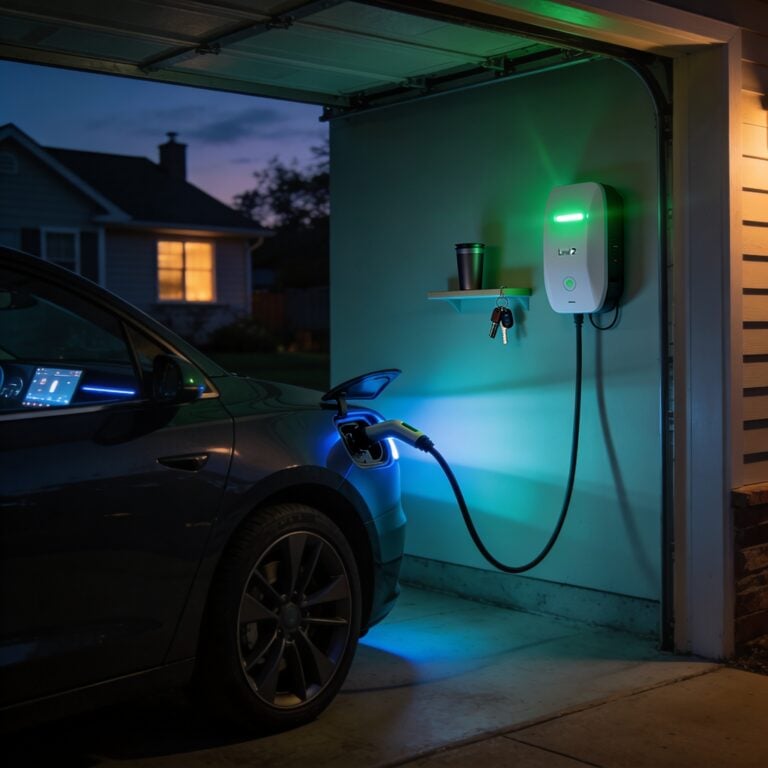
- Mounting the charger at the appropriate height and location on the garage wall
- Making all connections and confirming everything is secure
- Scheduling the inspection with the local jurisdiction
- Testing the installation and walking you through the charger’s operation
For a straightforward installation in a home with adequate panel capacity and an attached garage, this is typically a one-day job. Homes that require a panel upgrade or more complex wire routing will take longer.
Ohio Edison and FirstEnergy occasionally offer rebates or incentives for EV charger installation and panel upgrades to support EV adoption. Incentive programs change, so check directly with your utility provider for current offerings.
Why Licensed Installation Matters More Than People Think
EV chargers are a consistent, high-draw electrical load. Unlike a lamp or a TV, a charging station pulls close to its maximum amperage for hours at a time, every night. That sustained load is what circuits and connections are designed for – when they’re installed correctly.
Improper installation of a Level 2 charger is a documented cause of electrical fires. Common issues include undersized wiring, improperly rated breakers, connections that weren’t made securely, and chargers installed without permits on circuits that were already at capacity.
This isn’t fear-mongering – it’s the reason the permit and inspection process exists. A licensed electrician who pulls a permit is accountable for the installation meeting code. An inspection confirms it. That documentation protects you.
Ohio license number EL.46490. ANR Electric is licensed, insured, and has been serving Northeast Ohio homeowners since 2011. We install EV chargers as a dedicated service – not as a sideline – and we handle the permitting process as part of every installation.
ANR Electric Installs EV Chargers Throughout Northeast Ohio
We serve Akron, Cuyahoga Falls, Stow, Hudson, Fairlawn, Tallmadge, Barberton, Ravenna, Kent, and surrounding communities in Summit County and Portage County. Whether your home is ready for installation today or needs a panel assessment first, we’ll give you a clear, honest picture of what you need.
Contact ANR Electric to schedule your EV charger installation consultation: anrelectricco.com/contact-us
Frequently Asked Questions About Home EV Charger Installation
Do I need an electrician to install a Level 2 EV charger at home?
Yes – and in Ohio, the installation requires a permit as well. A Level 2 charger runs on a dedicated 240-volt circuit, which involves work inside your main electrical panel. This is not a DIY project. Improper installation is a documented cause of electrical fires, and unpermitted work creates problems for your insurance and any future home sale.
How do I know if my electrical panel can handle an EV charger?
A licensed electrician will evaluate your panel’s current capacity and available breaker space as part of the installation assessment. Homes with 200-amp service and available capacity can usually accommodate an EV circuit without an upgrade. Older homes with 100-amp panels, or panels that are already fully loaded, may require a panel upgrade first.
What’s the difference between Level 1 and Level 2 EV charging at home?
Level 1 uses a standard 120-volt outlet and adds roughly 3-5 miles of range per hour – practical for very low daily mileage. Level 2 uses a dedicated 240-volt circuit and adds roughly 20-30 miles of range per hour, giving most drivers a full charge overnight. For anyone using their EV as a primary vehicle, Level 2 is the right choice.
How long does a home EV charger installation take?
For a straightforward installation – adequate panel capacity, attached garage, clean routing – most installations are completed in a single day. Homes that require a panel upgrade or complex wiring runs will take additional time. Your electrician can give you a realistic timeline after the initial assessment.
Does my city require a permit for EV charger installation in Akron, Ohio?
Yes. EV charger installation requires a permit in Akron and throughout Ohio. A permitted installation is inspected and confirmed to meet the National Electrical Code, which protects you from fire risk, supports your homeowner’s insurance coverage, and ensures the installation is documented properly for future home sales.
Can I install an EV charger in my garage if it has minimal electrical infrastructure?
Yes – your electrician will run a new dedicated circuit from your main panel to the garage as part of the installation. The garage doesn’t need existing 240-volt infrastructure. The key variable is your main panel’s capacity to support the new circuit.
Will an EV charger significantly increase my electric bill?
Your bill will go up to reflect the electricity you’re using to charge your vehicle – but you’re replacing gas costs with electricity costs, and electricity is typically cheaper per mile. Using your charger’s scheduling feature to charge during off-peak hours (usually overnight) can reduce the impact. Many EV owners find their total fuel costs go down significantly after switching.
What EV charger brands does ANR Electric install?
We install a range of quality Level 2 charging equipment and can help you choose the right unit for your vehicle, your garage setup, and your budget. We’ll walk you through the options during your consultation so you’re making an informed decision – not just buying whatever’s on sale at a big box store.