If you own a home in Akron built between 1960 and 1980, there’s a good chance you’re living with electrical systems that were never designed for how we use electricity today. Back then, a typical home had a refrigerator, maybe a window air conditioner, and a handful of lamps. Today? You’re running central air, multiple computers, smart home devices, kitchen appliances, charging stations, and entertainment systems—all at the same time.
The problem isn’t just that these older electrical systems are outdated. Many were built with materials and methods we now know are genuinely dangerous. From aluminum wiring that increases fire risk by 5,500% to electrical panels that have been recalled for causing house fires, homes from this era often contain electrical time bombs.
The good news? You can identify these hazards and fix them before they cause a tragedy. Here are the five most dangerous electrical systems found in 1960s and 1970s Akron homes—and what you need to do about them.
Here are the 5 most common outdated electrical systems:
1. Aluminum Wiring (1965-1973): The 55x Fire Hazard
Why It Was Used:
Between 1965 and 1973, copper prices skyrocketed due to Vietnam War demand. Builders switched to aluminum wiring as a cheaper alternative. Approximately two million homes in North America—including thousands in Northeast Ohio—were wired with single-strand aluminum during this period.
Why It’s Dangerous:
Aluminum has properties that make it genuinely hazardous for residential wiring:
It expands and contracts dramatically: Every time you use electricity, the aluminum heats up and expands. When you stop using it, it cools and shrinks. After thousands of cycles over decades, aluminum wires work themselves loose from their connections. Loose connections create heat. Heat creates fires.
It oxidizes into a non-conductive coating: When aluminum is exposed to air, it develops aluminum oxide on its surface. Unlike copper’s oxidation (which still conducts electricity), aluminum oxide acts as an insulator. This creates resistance at connections, generating even more heat.
It’s soft and easy to damage: Aluminum wire is much softer than copper. During installation—or anytime someone worked on your electrical system—it was easy to nick or crush the wire, creating weak points that eventually fail.
The Statistics:
According to the U.S. Consumer Product Safety Commission, homes with aluminum wiring are 55 times more likely to have fire hazard conditions at electrical connections than homes wired with copper. That’s not 55% more likely—it’s 5,500% more likely.
How to Identify It:
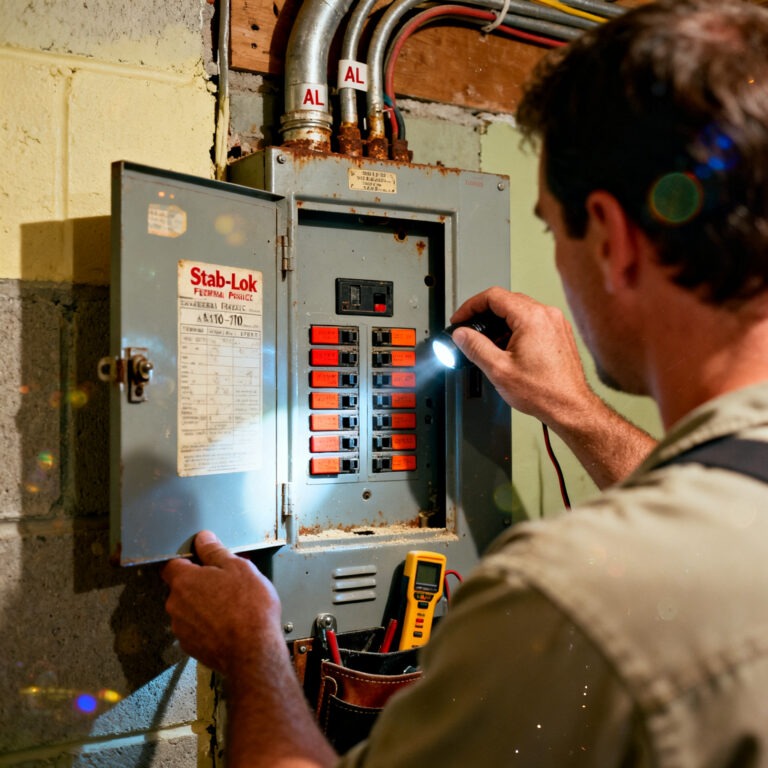
Look in your electrical panel, attic, or basement for exposed wiring. Aluminum wire will be marked with “AL,” “ALUM,” or “ALUMINUM” printed on the cable. The wire itself looks dull silver-gray instead of the orange-copper color of copper wire.
You can also check your outlets and switches. If they’re stamped with “CO/ALR” or “CU-AL,” they’re rated for aluminum—which means you probably have it.
Warning Signs:
- Flickering lights throughout the home
- Warm or hot outlet cover plates
- Burning smell from outlets or switches
- Outlets or switches that don’t work intermittently
- Discoloration around outlets or switches
The Fix:
You have three CPSC-approved options:
Complete Rewiring: $8,000-$15,000 for an average home. This permanently eliminates the problem by replacing all aluminum with copper wire.
COPALUM Connectors: $70-$150 per connection point (homes typically have 30-100 connections). A certified technician uses a special tool to create a permanent cold-weld connection between copper pigtails and aluminum wires.
AlumiConn Connectors: $40-$80 per connection point. These use precision set screws to connect copper pigtails to aluminum wires. Any licensed electrician can install them.
Most homeowners with aluminum wiring spend $3,000-$8,000 on COPALUM or AlumiConn remediation.
Don’t ignore this. Aluminum wiring issues get worse with time, not better. And insurance companies either won’t cover homes with aluminum wiring or charge significantly higher premiums.
2. Federal Pacific and Zinsco Electrical Panels: The Recalled Fire Starters
Why They Were Used:
Federal Pacific Electric (FPE) panels were installed in millions of homes from the 1950s through the 1980s. Zinsco panels were popular from the 1960s through the 1970s. Both companies marketed their panels as safe, affordable alternatives to other brands.
Why They’re Dangerous:
Here’s the terrifying truth: these panels don’t work the way they’re supposed to.
Federal Pacific Electric Panels:
In proper electrical panels, circuit breakers are supposed to trip (shut off) when a circuit is overloaded or short-circuits. That’s literally their entire job—to prevent fires by cutting power when something goes wrong.
Federal Pacific breakers often don’t trip when they should. Independent testing found that FPE breakers failed to trip up to 60% of the time during overcurrent conditions. Even worse, the breakers can appear to trip (the handle moves to the “off” position) while still allowing electricity to flow.
The result? Overloaded circuits continue drawing power, wires overheat, and fires start—all while the homeowner thinks the breaker has shut things down.
Zinsco Panels:
Zinsco panels have a different but equally dangerous problem. The aluminum bus bars inside the panel can corrode and melt, fusing the circuit breakers to the bus bar. When this happens, breakers can’t trip at all—they’re literally stuck in the “on” position.
Zinsco breakers are also known to fail internally, appearing to be off while still conducting electricity.
The Statistics:
The Consumer Product Safety Commission investigated Federal Pacific panels in the 1980s. While FPE disputed the findings, independent testing showed a failure rate of 25-60% depending on the test conditions.
Estimates suggest Federal Pacific panels may be responsible for thousands of fires and hundreds of deaths since they were installed.
How to Identify Them:
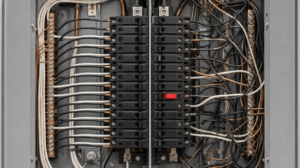
Federal Pacific: Open your electrical panel door. Look for “FPE,” “Federal Pacific,” or “Stab-Lok” printed inside the panel or on the breakers. FPE breakers are often thin and have a distinctive red or orange background on the switch.
Zinsco: Look for “Zinsco,” “Magnetrip,” “Challenger,” or “Sylvania” printed on the panel or breakers. Zinsco panels often have a distinctive colorful appearance with breakers in different colors.
Warning Signs:
- Breakers that won’t reset after tripping
- Breakers that feel hot to the touch
- Burning smell from the panel
- Scorch marks inside the panel
- Breakers that appear to trip but power doesn’t shut off
- The panel itself feels warm
The Fix:
There is no “fix” for these panels—they must be completely replaced. Electrical panel replacement costs $1,500-$4,000 depending on your home’s service capacity and specific requirements.
This is non-negotiable. These panels are documented fire hazards. Replace them immediately. Your insurance company, home inspector, and mortgage lender will all agree.
3. Insufficient Electrical Service: The 60-Amp Bottleneck
Why It Was Used:
In the 1960s and early 1970s, many smaller homes were built with 60-amp electrical service. This was considered adequate for homes that relied primarily on gas for heat, water heating, and cooking—and had minimal electrical appliances.
Why It’s Dangerous:
A 60-amp panel provides only about 48 amps of usable capacity (panels shouldn’t be loaded beyond 80% of their rating). That’s barely enough to run a modern refrigerator, a few lights, and maybe a window air conditioner—but not all at the same time.
The danger comes when you continuously overload the system:
Overheated wires: When you draw more power than the system was designed for, wires heat up. Over time, this deteriorates the wire insulation, creating fire risks.
Tripped breakers become routine: People get used to breakers tripping and just keep resetting them. But those trips are warnings that you’re exceeding safe capacity.
Dangerous workarounds: Homeowners replace properly-sized breakers with larger breakers to stop the tripping. Now the breaker won’t trip—but the wires behind the walls overheat because they’re carrying more current than they can safely handle.
What 60 Amps Can’t Handle:
A modern home needs electrical service for:
- Central air conditioning: 15-20 amps
- Electric water heater: 18-25 amps (if not gas)
- Refrigerator: 6-8 amps
- Microwave: 10-12 amps
- Dishwasher: 10-12 amps
- Multiple computers and devices: 5-10 amps
- Lighting throughout the home: 5-10 amps
You can’t run all of this on 60 amps—which means you’re constantly juggling what you can use, or you’re silently overloading your electrical system.
How to Identify It:
Check your main circuit breaker in your electrical panel. It will be labeled “60” if you have 60-amp service. You can also look at your electric meter—older round meters with 2-wire service (only two wires coming from the pole) typically indicate 60-amp service.
Warning Signs:
- Breakers trip frequently, especially when running multiple appliances
- Lights dim when appliances kick on
- You consciously avoid running certain things simultaneously
- Someone has installed subpanels to add more circuits
- Heavy reliance on extension cords and power strips
The Fix:
Upgrade to 200-amp service. This typically costs $2,500-$5,000 including the new panel, service upgrade, utility coordination, and permits.
The good news: this upgrade not only makes your home safe—it adds significant value and makes your home appealing to modern buyers.
4. Outdated Two-Prong Outlets: No Ground, No Safety
Why They Were Used:
Before the 1960s, most homes were wired with two-wire systems (hot and neutral, no ground). Even into the 1970s, many homes still had two-prong outlets in bedrooms and living areas. At the time, most appliances had two-prong plugs, so this seemed fine.
Why They’re Dangerous:
Two-prong outlets have no ground wire. The ground wire provides a safe path for electricity to follow if something goes wrong—like if a wire comes loose inside an appliance and touches the metal case.
Without a ground:
Electric shock risk: If you touch an appliance with a fault, YOU become the ground. The electricity flows through you instead of safely into the ground wire.
No GFCI protection: You can’t install GFCI outlets on two-wire circuits (technically you can, but they won’t provide ground fault protection—only line-to-neutral protection).
Unsafe for modern appliances: Three-prong appliances need that ground for safety. Using a “cheater plug” to convert a three-prong plug to fit a two-prong outlet defeats the safety feature.
Fire risk: Without proper grounding, electrical faults can cause arcing and fires rather than tripping breakers.
How to Identify Them:
Walk through your home and look at your outlets. Two-prong outlets have only two slots (for the plug prongs) with no round ground hole below them.
You can also buy an outlet tester for $5-$10 at any hardware store. Plug it into three-prong outlets—if the tester shows “open ground,” that outlet has no ground wire even though it has three prongs (a dangerous condition).
Warning Signs:
- You’re using cheater plugs (three-prong to two-prong adapters)
- You get small shocks from appliances
- Appliances feel “tingly” when you touch them
- Heavy reliance on surge protectors (which can’t work properly without grounds)
The Fix:
You have a few options:
Install GFCI outlets: $100-$200 per outlet. GFCIs can protect two-wire circuits from ground faults, though they don’t provide true grounding. Label them “No Equipment Ground.”
Run new ground wires: $200-$400 per outlet. An electrician runs a ground wire from the outlet back to the panel or to a nearby ground source.
Complete rewiring: $8,000-$20,000 for a whole home. This is the only way to have properly grounded outlets throughout the home.
Most homeowners start with GFCI installation in critical areas (kitchen, bathroom, outdoor) and gradually upgrade as budget allows.
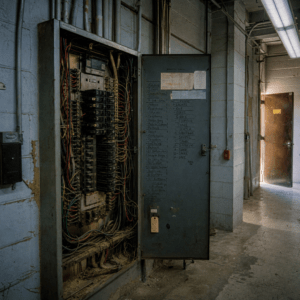
5. Cloth-Insulated and Deteriorating Wiring: The Hidden Time Bomb
Why It Was Used:
Before modern plastic insulation (called Romex), electrical wires were insulated with rubber wrapped in cloth fabric. This was standard from the 1920s through the 1960s, with some use continuing into the early 1970s.
Why It’s Dangerous:
Cloth-insulated wiring wasn’t designed to last forever. After 50-60 years:
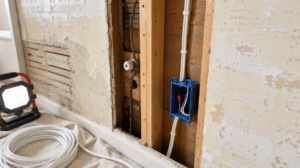
The insulation deteriorates: The rubber becomes brittle and cracks. The cloth fabric disintegrates. You’re left with exposed wires behind your walls.
Exposed wires short circuit: When deteriorated wires touch each other, wood framing, or metal junction boxes, they create shorts that can start fires.
It can’t handle modern loads: Old cloth-insulated wiring is often undersized for modern electrical demands—14-gauge or even 16-gauge wire on circuits that should be 12-gauge.
Modifications make it worse: Every time someone worked on the electrical system—adding outlets, moving switches, installing ceiling fans—they disturbed brittle insulation, making the problem worse.
How to Identify It:
You need to see the wiring, which usually means checking your attic, basement, or crawl space. Look for:
- Wiring wrapped in cloth fabric (may be black, white, or striped)
- Wire that looks very old and discolored
- Insulation that crumbles or flakes when touched
- Round wire (modern Romex is flat)
Never touch wiring you suspect is deteriorated—call an electrician for inspection.
Warning Signs:
- Your home was built before 1970 and has never been rewired
- Burning smell from walls or ceiling
- Frequent shorts or blown fuses/tripped breakers
- Outlets or switches that spark
- Lights that flicker when walls are bumped
The Fix:
Complete rewiring is the only real solution: $8,000-$20,000 depending on home size, accessibility, and whether walls need to be opened.
Some homes can be partially rewired—addressing the worst areas while leaving accessible areas with good-condition wiring alone. This might cost $3,000-$8,000.
Why 1960s-70s Akron Homes Are Particularly at Risk
Akron experienced significant suburban expansion during the 1960s and 1970s. Neighborhoods like Firestone Park, Ellet, Chapel Hill, Kenmore, and parts of Cuyahoga Falls saw rapid development during exactly the period when aluminum wiring, Federal Pacific panels, and other problematic systems were common.
Added Risk Factor: Northeast Ohio Weather:
Our climate accelerates electrical problems:
Temperature extremes: Cold winters and hot summers mean electrical systems experience constant expansion and contraction cycles—exactly what causes aluminum wiring to fail.
Humidity: Basements in Ohio homes often have moisture issues, which accelerates deterioration of old wiring insulation and promotes corrosion in electrical panels.
Ice and snow: Overhead electrical service lines can be damaged by ice storms, creating issues at the connection point to your home.
The Real Cost of Ignoring Outdated Electrical Systems
House Fires:
According to the National Fire Protection Association, electrical failures or malfunctions caused an estimated 46,700 home fires per year between 2015-2019, resulting in:
- 390 deaths annually
- 1,330 injuries annually
- $1.5 billion in property damage annually
Many of these fires originated in homes with outdated electrical systems.
Insurance Issues:
Many insurance companies:
- Refuse to insure homes with aluminum wiring or Federal Pacific panels
- Charge 20-50% higher premiums for homes with known electrical hazards
- Require electrical upgrades as a condition of coverage
- Cancel policies upon discovering hazardous electrical systems
Home Sale Problems:
Trying to sell a home with aluminum wiring or Federal Pacific panels:
- Reduces sale price by 10-20% on average
- Extends time on market significantly
- May prevent mortgage approval entirely
- Creates negotiation headaches even with cash buyers
Electrocution Risk:
Beyond fires, outdated electrical systems create genuine shock hazards—especially for children who don’t understand electrical safety.
Creating a Safe Electrical Upgrade Plan
If your 1960s-70s Akron home has multiple electrical issues, prioritize them:
Immediate (Do This Month):
- Federal Pacific or Zinsco panel replacement
- Active aluminum wiring remediation
- Any visible deteriorated wiring
High Priority (Within 6 Months):
- 60-amp service upgrade to 200 amps
- GFCI installation in kitchens, bathrooms, outdoor areas
- Grounding for major appliances
Medium Priority (Within 1-2 Years):
- Remaining GFCI and outlet upgrades
- Additional circuits for modern needs
- Lighting upgrades
Budget Approach:
Phase 1: Safety First ($3,000-$6,000)
- Replace hazardous panel
- Address aluminum wiring or most deteriorated wiring
- Install critical GFCI outlets
Phase 2: Capacity and Code ($2,000-$4,000)
- Upgrade to 200-amp service (if needed)
- Add GFCI throughout
- Ground major outlets
Phase 3: Modernization ($1,000-$3,000)
- Additional outlets where needed
- USB outlets, updated fixtures
- Outdoor improvements
Professional Assessment: Money Well Spent
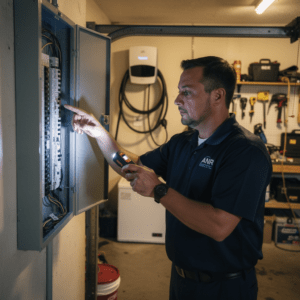
Before you start throwing money at electrical upgrades, get a professional assessment. For $150-$300, a licensed electrician will:
- Identify which specific hazards exist in your home
- Prioritize issues by safety risk
- Provide cost estimates for each upgrade
- Create a phased plan that fits your budget
- Ensure you’re addressing real problems, not imaginary ones
This assessment can save you thousands by focusing your investment where it matters most.
Professional Electrical Services for 1960s-70s Akron Homes
At ANR Electric, we’ve been serving Akron and Northeast Ohio since 2011, and we’ve seen every electrical hazard these decades of homes can throw at us. We specialize in updating older homes safely and affordably.
Our Services for Older Homes Include:
- Comprehensive electrical safety assessments
- Federal Pacific and Zinsco panel replacements
- Aluminum wiring remediation (COPALUM and AlumiConn certified)
- Service upgrades from 60/100-amp to 200-amp
- Complete and partial home rewiring
- GFCI and grounding upgrades
- Complete residential electrical services for homes of any age
We Understand Older Akron Homes:
Working on 1960s-70s homes requires specific expertise:
- Understanding how these homes were originally wired
- Working around finished spaces without unnecessary damage
- Meeting modern codes while respecting historic construction
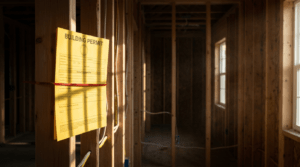
- Coordinating with Akron and Summit County permit requirements
- Balancing safety with budget realities
Don’t let outdated electrical systems put your family at risk. These aren’t just inconveniences—they’re genuine fire and safety hazards that get worse with time.
Contact ANR Electric today at (330) 644-4454 or request an electrical safety assessment online.
Key Takeaways: Electrical Hazards in 1960s-70s Homes
✅ Aluminum wiring is 55x more dangerous – Homes wired 1965-1973 need professional remediation, not DIY fixes
✅ Federal Pacific and Zinsco panels must be replaced – These recalled panels don’t trip when they should, causing fires
✅ 60-amp service is dangerously inadequate – Modern homes need 200-amp service for safe operation
✅ Two-prong outlets lack critical safety grounding – GFCI installation provides protection without complete rewiring
✅ Cloth-insulated wiring deteriorates over time – 50+ year old insulation becomes brittle and creates fire hazards
✅ These problems get worse, not better – Ignoring electrical hazards increases risk every year
✅ Insurance companies care about electrical safety – Hazardous systems result in higher premiums or coverage denial
✅ Phase upgrades by safety priority – Start with panels and aluminum wiring, then capacity, then convenience
✅ Professional assessment is essential – $150-$300 inspection identifies real hazards and prevents wasted spending
✅ Akron’s weather accelerates electrical problems – Temperature extremes worsen expansion/contraction issues in aluminum wiring
Frequently Asked Questions About 1960s-70s Home Electrical Systems
How do I know if my home has aluminum wiring?
Check your electrical panel, attic, or basement for exposed wiring marked with “AL,” “ALUM,” or “ALUMINUM” on the cable. The wire itself looks dull silver-gray instead of copper’s orange-brown color. You can also check outlets and switches for “CO/ALR” stamps, which indicate they’re rated for aluminum. Homes built between 1965-1973 are most likely to have aluminum wiring. When in doubt, hire an electrician for a definitive inspection.
Can I just replace my Federal Pacific panel myself to save money?
No. Electrical panel replacement requires shutting off power from the utility company, working with live electrical service, obtaining permits, and passing inspections. This is extremely dangerous work that can be fatal if done incorrectly. Improper panel installation creates serious fire hazards and will be caught during home inspections. Always hire a licensed electrician for panel replacements. Trying to save $1,000-$2,000 in labor isn’t worth risking your life or your home.
Is 60-amp electrical service illegal or against code?
No, 60-amp service isn’t illegal if it was properly installed when your home was built. However, it’s inadequate for modern use and creates safety risks through constant overloading. Many insurance companies charge higher rates for 60-amp service, and it will hurt your home’s resale value. While not illegal, upgrading to 200-amp service is highly recommended for safety and functionality.
How much does it cost to upgrade from 60-amp to 200-amp service?
Upgrading from 60-amp to 200-amp service typically costs $2,500-$5,000 in the Akron area. This includes the new 200-amp panel, service upgrade (new meter and service cables), utility coordination, permits, and inspection. Costs vary based on distance from the utility transformer, whether the meter needs relocation, and any additional electrical work needed. Most homes see this as a worthwhile investment in safety and home value.
Will homeowner’s insurance cover electrical upgrades?
Typically no. Insurance covers sudden damage from electrical problems (like fires), but doesn’t cover upgrading outdated systems. However, some insurers offer small discounts or incentives for upgrading hazardous systems like Federal Pacific panels or aluminum wiring. Check with your insurance company—they may reduce premiums after upgrades. Some utility companies offer rebates for electrical efficiency upgrades, though these usually focus on heating/cooling equipment.
Can I sell my house with aluminum wiring or a Federal Pacific panel?
Legally yes, but practically it’s very difficult. These issues will be flagged during home inspections, and most buyers will either walk away, demand repairs, or negotiate significant price reductions (often 10-20% of home value). Many mortgage lenders won’t approve loans on homes with Federal Pacific panels or unaddressed aluminum wiring. Selling “as-is” means accepting well below market value. Fixing these issues before listing typically preserves more of your home’s value.
How long does cloth-insulated wiring last?
Cloth-insulated wiring was designed for approximately 50 years of service life. If your home was wired in the 1960s or earlier, that insulation is now 60+ years old and likely deteriorating. The rubber becomes brittle, the cloth disintegrates, and you’re left with exposed wires. Not all cloth-insulated wiring fails at the same rate—dry, cool areas deteriorate slower than hot attics or damp basements. Professional inspection is the only way to know the condition of your specific wiring.
What’s the most dangerous electrical issue in 1960s-70s homes?
Federal Pacific and Zinsco panels are arguably the most dangerous because they’re designed to prevent fires but do the opposite. Aluminum wiring is a close second with its 55x increased fire risk. Both should be addressed immediately. Deteriorating cloth-insulated wiring comes third. While 60-amp service and two-prong outlets create problems, they’re less likely to cause immediate catastrophic failure if the system isn’t overloaded.
Do I need to rewire my entire 1970s home?
Not necessarily. If your home has copper wiring in good condition with proper insulation, you may only need to upgrade the panel and add GFCI protection. However, homes with aluminum wiring, cloth-insulated wiring, or extensive deterioration may need complete or partial rewiring. A professional electrical inspection will determine what’s actually needed. Many homeowners can address the most critical issues (panel, aluminum wiring) without full rewiring.
How can I tell if my electrical panel is overloaded?
Signs of an overloaded panel include: breakers that trip frequently, dimming lights when appliances run, warm or hot panel box, burning smell from the panel, or having to “choose” what to run simultaneously. If you’ve added subpanels or your panel has no empty breaker spaces, you’re likely at capacity. A licensed electrician can perform a load calculation to determine if your panel is adequate for your home’s needs.
Additional Resources
For more information about electrical fire safety and prevention in older homes, visit the National Fire Protection Association’s Electrical Safety page, which provides comprehensive resources on identifying and addressing electrical hazards.
This article provides general information about electrical hazards commonly found in 1960s-70s homes. Every home’s situation is unique and requires professional assessment by a licensed electrician. ANR Electric serves Akron, Canton, Cuyahoga Falls, Hudson, Stow, and surrounding communities throughout Northeast Ohio.