If you’ve ever had a breaker trip the moment you plug in your space heater, fire up the microwave, or run your air compressor in the garage, your home is giving you a clear signal. Not every appliance is meant to share.
A dedicated circuit is exactly what it sounds like – a circuit wired exclusively to serve one appliance or one location, with nothing else drawing from it. No competition. No overloading. No nuisance tripping.
For Akron homeowners adding EV chargers, home offices, kitchen appliances, or finishing basements and garages, dedicated circuits are one of the most practical and most requested electrical upgrades we install. This guide explains what they are, which appliances need them, and what the installation process looks like.
How a Dedicated Circuit Is Different From a Standard Circuit
Your home’s electrical system is organized into circuits – each one a loop of wiring that runs from your electrical panel, through a series of outlets or fixtures, and back. Most circuits serve multiple outlets and locations throughout a room or area of your home.
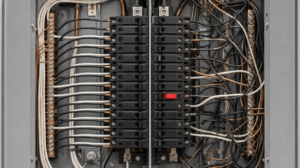
A dedicated circuit breaks that pattern. It runs from a single breaker in your panel directly to one location or one appliance, and nothing else is connected to it. The breaker is sized specifically for that appliance’s power requirements, and the wire gauge matches.
The result is a circuit with its full capacity reserved for one job – which means no competition for power, no tripping from a neighboring device pulling too much, and no risk of overloading from accumulated smaller loads.
Which Appliances Actually Require a Dedicated Circuit?
The National Electrical Code (NEC) requires dedicated circuits for certain appliances. Others don’t require it by code but perform better and more safely with one. Here’s a practical breakdown:
Required by code in new construction and major renovations:
- Refrigerator
- Dishwasher
- Microwave (built-in or countertop over a certain wattage)
- Garbage disposal
- Washing machine
- Electric range or cooktop
- Electric dryer
- Electric water heater
- Central air conditioning
- Furnace or air handler
Not always required by code but strongly recommended:
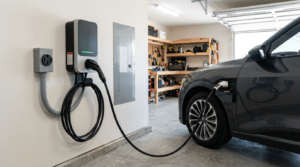
- EV charger (Level 2 chargers draw 32-48 amps continuously – a dedicated circuit is non-negotiable). See our full guide to home EV charger installation in Akron for the full picture.
- Home office with high-draw equipment (multiple monitors, workstations, laser printers)
- Chest freezer or additional refrigerator in the garage
- Window AC units (larger units, 10,000 BTU or more)
- Electric space heaters used regularly
- Hot tubs and jacuzzis
- Sump pump
- Garage workshop equipment – table saws, air compressors, welders
Signs You Already Need a Dedicated Circuit
Sometimes homeowners don’t know they need a dedicated circuit – they just know something is wrong. These are the most common signs:
A specific breaker trips on a predictable pattern.
If it’s always the same breaker, and always when the same appliance is running, that circuit is overloaded. Adding a dedicated circuit for the offending appliance is often the cleanest fix. We cover the full range of causes in our circuit breaker tripping guide for Akron homeowners.
You have to unplug something before using something else.
This is overloading in plain sight. You shouldn’t have to manage your appliance usage around your circuits.
Lights dim when a large appliance starts.
When your refrigerator compressor or AC unit kicks on and the lights drop, it means that appliance is sharing a circuit with your lighting and pulling hard on startup. A dedicated circuit for the appliance eliminates this.
Your home was built before the 1990s.
Older homes were wired for a fraction of the electrical load a modern household generates. If you’ve added appliances, a home office, or an EV charger to a home with original wiring, the circuits were never designed for what you’re asking of them.
You’re finishing a basement, adding a garage workshop, or remodeling a kitchen.
These are the right moments to get ahead of the problem. Adding dedicated circuits during a renovation is dramatically less expensive than retrofitting them later.
What the Installation Process Looks Like
Dedicated circuit installation is not a DIY project in Ohio. It involves working inside your main electrical panel – running a new circuit from the breaker to the appliance location – and requires a permit for most installations.
Here’s what the process typically looks like with ANR Electric:
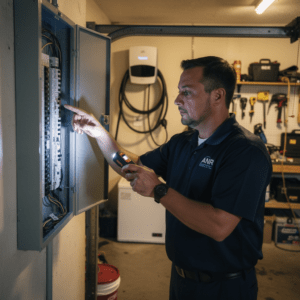
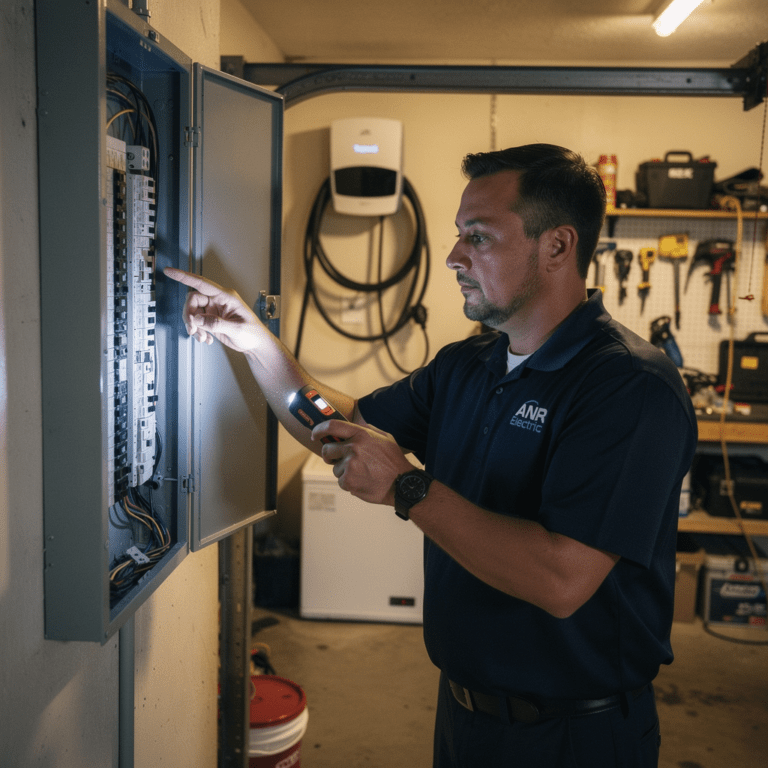
Assessment.
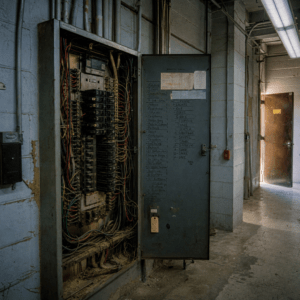
We look at your current panel to confirm there’s available breaker space and sufficient capacity. Many older Akron homes have 100-amp panels that are already near their limits. Our electrical panel upgrade guide covers what that involves.
Planning the route.
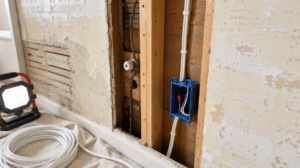
We determine the cleanest, most code-compliant path to run wire from your panel to the appliance location. In finished homes, this may involve running wire through walls, attics, or crawl spaces. We aim for minimal disruption to finished surfaces.
Installation.
A new breaker is added to your panel, wire is run to the appliance location, and the outlet or connection point is installed. All wire gauge and breaker sizing matches the appliance’s requirements.
Inspection.
Permitted work is inspected by the local jurisdiction. This protects you during any insurance claim or home sale. A straightforward dedicated circuit installation is typically a half-day to one-day job.
How Many Circuits Can Your Panel Support?
Every dedicated circuit requires a slot in your main panel. Most residential panels have 20 to 40 slots. But it’s not just about slots – it’s about total amperage capacity.
If you have a 100-amp panel in an older home that’s already running an electric range, a dryer, a central AC system, and a water heater, adding a 40-amp EV circuit on top of everything else may push you past what the panel can safely supply.
This is exactly the kind of assessment we do before any dedicated circuit installation. If your panel has room and capacity, we proceed. If it doesn’t, we have an honest conversation about what comes first.
ANR Electric Installs Dedicated Circuits Throughout Northeast Ohio
Our licensed electricians serve homeowners in Akron, Stow, Cuyahoga Falls, Hudson, Fairlawn, Barberton, Tallmadge, Ravenna, Kent, and surrounding communities throughout Summit County and Portage County.
Contact ANR Electric to schedule a dedicated circuit consultation: anrelectricco.com/contact-us
Frequently Asked Questions
How much does it cost to add a dedicated circuit in an Akron home?
The cost depends on several factors – the length of the wire run, whether the panel has available capacity, and the amperage required for the specific appliance. Single dedicated circuit installations are generally straightforward projects. Contact ANR Electric for a quote specific to your home and appliance.
Can I add a dedicated circuit to my home myself?
In Ohio, electrical work that involves your main panel requires a licensed electrician and a permit. This is not a gray area. Unpermitted electrical work creates problems for homeowners during insurance claims and home sales, and panel work carries serious safety risks when performed without proper training and equipment.
How do I know which breaker size I need for a dedicated circuit?
Breaker sizing is determined by the appliance’s rated amperage, which is found in the owner’s manual or on the appliance’s nameplate. Your electrician will verify this during the assessment and select the correct breaker and wire gauge to match.
How long does it take to install a dedicated circuit?
A single dedicated circuit installation in a home with available panel capacity is typically a half-day to full-day job. Longer wire runs, finished walls that require more careful routing, or panel upgrades will extend the timeline.
Do I need a dedicated circuit for my refrigerator?
The National Electrical Code requires dedicated circuits for refrigerators in new construction. In older homes where the refrigerator shares a circuit, it’s not always causing a problem – but if your refrigerator circuit is also running other kitchen loads and you’re experiencing tripping or performance issues, adding a dedicated circuit is the right fix.
What is the difference between a dedicated circuit and a GFCI outlet?
These are separate things that solve different problems. A dedicated circuit is about capacity – making sure one appliance has its own power supply. A GFCI outlet is a safety device that cuts power when it detects a ground fault – required in bathrooms, kitchens, and other wet locations. Some circuits need both: dedicated capacity and GFCI protection.
My home was built in the 1970s. Can I still add dedicated circuits?
Yes, but your electrician will need to assess your panel and existing wiring first. Homes from this era sometimes have aluminum branch circuit wiring or 100-amp panels that are already near capacity. These factors affect what’s possible and what should be addressed first.
Is a permit required to add a dedicated circuit in Akron?
Yes. Electrical work involving your main panel requires a permit in Akron and throughout Ohio. A permitted installation is inspected and documented – which protects you, your appliances, and your home’s resale value. Any electrician who suggests skipping the permit is not someone you want working in your panel.