Before you string lights across every inch of your roof and yard, there’s an important question: How many Christmas lights can your home’s electrical system safely handle?
At ANR Electric, we get this question constantly between Thanksgiving and Christmas. Holiday lighting fires send hundreds to emergency rooms each year, and many could have been prevented with proper electrical planning.
This guide will help you calculate your lighting capacity, understand safety limits, and enjoy a brilliantly lit home without risking electrical fires, tripped breakers, or blown fuses.
Understanding Your Home’s Electrical Capacity to run Christmas Lights
What is a Circuit?
Think of an electrical circuit like a highway with a maximum capacity. An electrical circuit has a maximum amount of current (measured in amps) it can safely carry.
Most residential circuits are:
- 15 amps (most common for lighting and general outlets)
- 20 amps (often used for kitchen, bathroom, and outdoor circuits)
Exceed these limits, and the circuit breaker trips—cutting power to protect your wiring from overheating.
The 80% Rule: Why You Can’t Use Full Capacity
Electrical code requires that continuous loads (anything running 3+ hours, such as Christmas lights) should not exceed 80% of a circuit’s capacity. Since Christmas lights run for hours, this rule applies.
Practical limits:
- 15-amp circuit: Safe maximum = 12 amps (15 × 0.80)
- 20-amp circuit: Safe maximum = 16 amps (20 × 0.80)
This 20% buffer prevents overheating and provides safety margin for voltage fluctuations common in Northeast Ohio winters.
How to Calculate Your Christmas Light Load
Step 1: Find the Wattage of Your Lights
Check packaging or labels on your light strings:
Incandescent lights:
- 100-count mini lights: 40-50 watts
- 25-count C7 lights: 175 watts
- 25-count C9 lights: 200 watts
LED lights:
- 100-count mini lights: 4-7 watts
- 25-count C7 lights: 17 watts
- 25-count C9 lights: 20 watts
Notice the difference? LEDs use about 90% less energy—a game-changer for holiday decorating.
Step 2: Convert Watts to Amps
Use this formula: Amps = Watts ÷ Volts
In U.S. homes, voltage is 120 volts.
Example with incandescent mini lights:
- 50 watts ÷ 120 volts = 0.42 amps per strand
Example with LED mini lights:
- 5 watts ÷ 120 volts = 0.04 amps per strand
Step 3: Add Up All Lights on the Circuit
Example on a 15-amp outdoor circuit (12 amps safe maximum):
Incandescent scenario:
- 10 strands mini lights: 10 × 0.42 = 4.2 amps
- 2 strands C9 lights: 2 × (200 ÷ 120) = 3.3 amps
- 1 lighted wreath: 25 ÷ 120 = 0.2 amps
- Total: 7.7 amps Safe
LED scenario:
- 50 strands mini lights: 50 × 0.04 = 2.0 amps
- 5 strands LED C9 lights: 5 × (20 ÷ 120) = 0.83 amps
- 3 LED wreaths: 3 × (3 ÷ 120) = 0.08 amps
- Total: 2.91 amps Plenty of capacity left!
Quick Reference Chart: How Many Strands of Christmas Lights Can You Connect?
On a 15-amp circuit (12 amps usable):
| Light Type | Watts per Strand | Max Strands |
| LED mini lights (100 ct) | 5W | 288 strands |
| Incandescent mini lights (100 ct) | 50W | 28 strands |
| LED C9 (25 ct) | 20W | 72 strands |
| Incandescent C9 (25 ct) | 200W | 7 strands |
Reality check: You’re limited by manufacturer’s connection limits (usually max 3-5 strands end-to-end) and practical installation limits before hitting these numbers.
Common Holiday Lighting Mistakes That Cause Problems
Mistake #1: Daisy-Chaining Too Many Extension Cords
The problem: Each connection creates resistance and heat buildup.
The solution:
- Use single, heavy-duty outdoor-rated extension cord
- Choose 12- or 14-gauge cords (lower number = thicker wire)
- Avoid connecting multiple extension cords together
- Keep total cord length under 100 feet when possible
For Akron homes: Northeast Ohio’s freeze-thaw cycles mean connections left outside can trap moisture and corrode. Check all connections mid-season.
Mistake #2: Using Indoor Lights Outdoors
The problem: Indoor lights aren’t weatherproofed for rain, snow, and freezing temperatures.
The solution:
- Only use lights rated for outdoor use (check label)
- Look for “UL Listed for Outdoor Use”
- Outdoor lights have heavier insulation and weatherproof connections
Mistake #3: Overloading a Power Strip to run Christmas Lights
The problem: Multiple high-wattage light strands can exceed the strip’s capacity, even if the circuit can handle it.
The solution:
- Check the power strip’s amp or watt rating
- Better yet, plug directly into outlets
- Never daisy-chain power strips
- Don’t use indoor power strips outdoors
Mistake #4: Using Damaged Light Strings
The problem: Frayed wires, broken sockets, and cracked insulation can cause shorts, shocks, or fires.
The solution:
- Inspect every strand before hanging
- Discard any with damage—not worth the risk
- Check for warm or melted plugs after first night
- Replace, don’t repair, damaged strings
Special Considerations for Christmas Lights for Akron and Northeast Ohio Homes
Ice and Snow Accumulation
Northeast Ohio gets real winter weather:
Snow load considerations:
- Ensure mounting methods of your Christmas lights can handle additional weight from snow and ice
- Don’t hang lights from gutters—ice dams add too much stress
- Use proper clips designed for your siding or roof edge
Ice storm precautions:
- Ice buildup can pull down lights and damage wiring
- After ice storms, inspect all outdoor lighting before plugging in
- Consider placement under eaves where ice is less likely
Older Akron Homes with Limited Electrical Service
Many homes in Highland Square and other historic neighborhoods have 60- or 100-amp service—significantly less than modern 200-amp standards.
Signs your service may be limited:
- Lights dim when furnace kicks on
- Can’t run multiple appliances simultaneously
- Fuse box instead of breaker panel
- Frequent blown fuses or tripped breakers
Solution: LED lights become essential. Their dramatically lower power draw means spectacular displays without overloading your system.
Long-term solution: Consider a service upgrade. ANR Electric can evaluate your home’s electrical capacity and provide upgrade options.
The LED Advantage: Why Professional Electricians Recommend Them for Christmas Lights
LED Christmas lights have revolutionized holiday decorating:
Energy savings:
- 90% less electricity than incandescent
- A typical LED display costs a fraction of incandescent for the entire season
Safety benefits:
- Much cooler operation (reduced fire risk)
- More durable plastic construction
- Can connect 40-50 strands end-to-end (vs. 3-5 for incandescent)
Better for Akron winters:
- Perform better in cold temperatures
- More resistant to breakage from ice
- Longer lifespan (often 10+ years)
Initial cost: Yes, LEDs cost more upfront, but they pay for themselves through energy savings and not needing annual replacement.
How to Safely Connect Multiple Light Strands
The Right Way to Connect Christmas Lights:
- Start closest to the power source
- Use manufacturer’s connectors (not tape or wire nuts)
- Follow maximum connection guidelines on packaging
- Protect all connections from moisture
- Secure connections so they won’t pull apart in wind
Connection Methods by Location:
Roofline:
- Use proper clips (not staples or nails)
- Weatherproof all connections
Trees and bushes:
- Wrap lights loosely (trees grow)
- Provide slack for wind movement
- Keep connections off ground and protected
Ground stakes and displays:
- Use stakes rated for your light gauge
- Run power cables away from walking paths
GFCI Protection: Required but Sometimes Problematic
Ground Fault Circuit Interrupter (GFCI) outlets are required for all outdoor outlets—they detect electrical leaks and shut off power before shocks or fires start.
Why GFCIs Trip with Christmas Lights:
- Moisture in connections from snow melting/refreezing
- Accumulated leakage from many light strings
- Older or damaged lights with degraded insulation
Solutions That Maintain Safety:
DO:
- Use high-quality lights with good insulation
- Protect connections from direct moisture
- Keep connections elevated and dry
- Replace old light strings
DON’T:
- Remove or bypass GFCI protection (dangerous and violates code)
- Use indoor-rated lights outdoors
- Leave connections in puddles or snow
If experiencing persistent GFCI tripping with your Christmas lights: Contact ANR Electric. The problem might be defective lights, a sensitive GFCI needing replacement, or a wiring issue requiring professional attention.
When You Need More Capacity: Options for Elaborate Displays
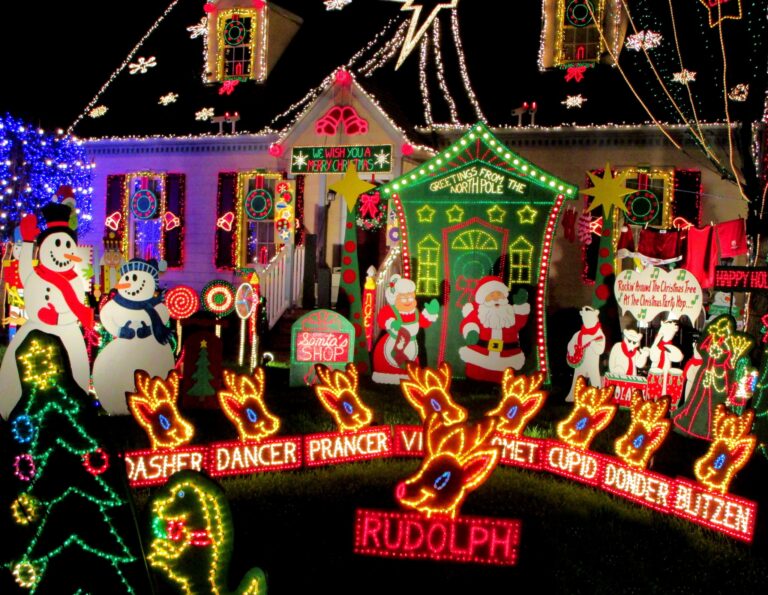
Planning a Clark Griswold-level display? Here are your options:
Option 1: Use Multiple Circuits
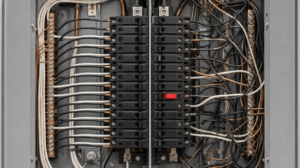
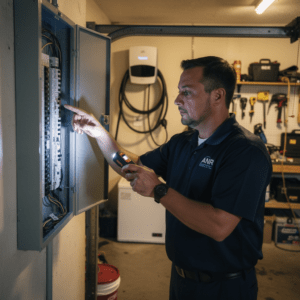
Check your electrical panel to identify outdoor circuits available.
How to identify different circuits:
- Turn off breakers one at a time
- Test which outlets lose power
- Map out available circuits
Option 2: Install Additional Outdoor Outlets
ANR Electric can add weatherproof outdoor outlets on separate circuits to distribute your lighting load.
Timing: Schedule now (November) for installation before you need it.
Option 3: Dedicated Holiday Lighting Circuit
For serious decorators, consider a dedicated 20-amp circuit specifically for holiday lights.
Benefits:
- Designed for high lighting loads
- Strategically placed outlets
- Can be controlled by single switch or timer
Option 4: Temporary Service Panel
For elaborate displays with extensive lighting, ANR Electric can design and install temporary service appropriate for your display.
Smart Timers and Controllers: Convenience and Safety
Programmable Timers:
- Lights on at sunset, off at bedtime automatically
- No forgetting to turn lights off
- Maintain display when traveling
Astronomical Timers:
- Automatically adjust for changing sunset times throughout season
- November sunset in Akron is around 5:30 PM; by late December it’s 5:15 PM
Smart Plugs:
- Control from anywhere via smartphone
- Voice control compatible
- Energy monitoring
- Custom scheduling
Installation tip: Outdoor smart plugs must be weatherproof rated.
The Pre-Lighting Safety Inspection Checklist
Before you flip the switch:
Electrical Safety:
- All outdoor outlets have weatherproof covers
- GFCI outlets tested and functioning
- Extension cords outdoor-rated and appropriate gauge
- No more than manufacturer’s recommended strands connected
- All connections protected from moisture
- No damage to light strings
Physical Safety:
- Lights secured properly
- No cords creating tripping hazards
- No lights near heat sources
- Tree lights wrapped loosely
Fire Prevention:
- Lights have adequate clearance from combustibles
- Indoor decorations not touching hot bulbs
- Real trees kept well-watered
- Smoke detectors tested
First-Night Test:
- Check all connections for warmth
- Verify no breakers tripped
- Inspect for moisture in connections
- Confirm timer functioning
When to Call ANR Electric: Professional Installation Services
You Should Call a Licensed Electrician If:
- Your current system can’t handle your display (frequent tripped breakers, dimming lights)
- You need new or upgraded outdoor outlets
- You’re uncomfortable with heights or electrical work
- You want permanent lighting infrastructure
ANR Electric Holiday Lighting Services:
Electrical capacity evaluation
Circuit installation
Outlet installation
Safety inspections
Troubleshooting
The Bottom Line: Plan for Safety, Shine with Confidence
With proper planning and attention to electrical capacity, you can create a stunning display that’s both safe and energy-efficient.
Key takeaways:
- Calculate your amp load to stay under circuit capacity (12 amps for 15-amp circuits)
- LED lights are dramatically safer and more energy-efficient
- Use outdoor-rated equipment for all exterior displays
- Protect connections from moisture and cold
- Inspect everything before plugging in
- When in doubt, call a professional
Your Next Steps:
- Inventory your lights and calculate amp load
- Inspect all equipment for damage
- Test circuits to identify available capacity
- Plan your layout to distribute load across multiple circuits
- Schedule professional installation if needed
Ready to power your holiday display safely? ANR Electric specializes in residential electrical service throughout Akron and Northeast Ohio.
Call ANR Electric: 330-644-4454
Schedule Online: anrelectricco.com
Serving: Akron, Canton, Medina, Cuyahoga Falls, and all of Northeast Ohio
Licensed, Insured, and Ready to Help Make Your Holiday Season Bright and Safe