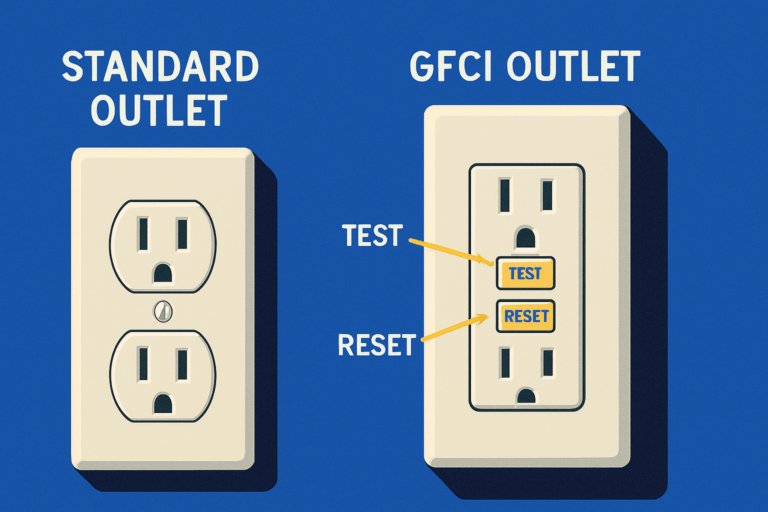
Have you ever noticed outlets in your bathroom or kitchen with “TEST” and “RESET” buttons? These are called GFCI outlets, and they’re one of the most important safety features in your home’s electrical system. Since Ohio adopted the 2023 National Electrical Code in April 2024, GFCI requirements have expanded significantly—and understanding where they’re required can help keep your family safe and your home up to code.
What Is a GFCI Outlet?
GFCI stands for Ground Fault Circuit Interrupter. Think of it as a super-fast circuit breaker that’s specifically designed to protect you from electric shock.
Here’s the simple version: A GFCI outlet constantly watches the electricity flowing through it. If it notices that even a tiny amount of electricity is going somewhere it shouldn’t—like through water or through you—it shuts off the power in a fraction of a second. We’re talking faster than you can blink.
Why does this matter? Let’s say your hair dryer falls into a sink full of water. A regular outlet keeps pumping electricity into that water, which could kill you if you reach in. A GFCI outlet? It cuts the power instantly—before you can get hurt.
GFCI vs. Regular Outlets: What’s the Difference?
Regular outlets simply provide electricity to whatever you plug into them. If something goes wrong—like a hair dryer falling into a sink full of water—a regular outlet keeps supplying power, creating a deadly shock hazard.
A GFCI outlet acts as an automatic safety guard. The moment it senses that dangerous current imbalance, it trips and cuts the power instantly. You can easily identify GFCI outlets by the TEST and RESET buttons on the front.
How GFCIs Save Lives
Since GFCIs were first required in homes in 1971, they’ve prevented thousands of electrocutions. According to the Consumer Product Safety Commission, GFCI protection has reduced electrocutions by approximately 83% in areas where they’re installed.
The most common scenario? Someone using an electrical device near water—blow-drying hair near a bathroom sink, using a radio near a bathtub, operating power tools in a damp basement, or plugging in holiday lights on a wet deck. In all these situations, GFCI protection can mean the difference between a minor inconvenience and a tragedy.
Where GFCI Outlets Are Required in Ohio Homes
Ohio’s adoption of the 2023 NEC brought significant changes to GFCI requirements. Here’s where you need GFCI protection in your Akron-area home:
Kitchens: ALL Outlets Now Require GFCI Protection
This is one of the biggest changes in recent years. Previously, only kitchen countertop outlets within 6 feet of the sink required GFCI protection. Now, every single outlet in your kitchen must be GFCI-protected, including:
- All countertop outlets
- Refrigerator outlet
- Microwave outlet
- Garbage disposal outlet
- Dishwasher outlet
- Any other kitchen outlet
The only exception? Outlets inside enclosed cabinets under sinks, which are dedicated to appliances like garbage disposals.
Why the change? Kitchens combine water, metal surfaces, and multiple appliances in one space. The expanded requirements recognize that electrical hazards aren’t limited to countertop areas—they exist throughout the entire kitchen.
Bathrooms: Complete GFCI Coverage Required
All outlets in bathrooms must have GFCI protection, without exception. This includes:
- Outlets near vanities and sinks
- Outlets within 6 feet of bathtubs or showers
- Outlets anywhere else in the bathroom
Additionally, any outlet within 6 feet of a bathtub or shower in any room (not just bathrooms) requires GFCI protection.
Laundry Rooms: Full Protection Required
All outlets in laundry rooms and utility rooms must have GFCI protection. This includes:
- Washing machine outlet
- Dryer outlet (if electric)
- Any other outlets in the space
Laundry areas combine water, dampness, and high-power appliances—a recipe for potential electrical hazards.
Garages: Every Outlet Needs Protection
Since 1978, all garage outlets have required GFCI protection, and this remains true today. This includes:
- Workbench outlets
- Outlets for power tools
- Ceiling-mounted outlets
- Outlets for freezers or garage door openers
Even if you’re just storing a vehicle in your garage and rarely use the outlets, they still need GFCI protection due to potential moisture exposure.
Basements: Finished or Unfinished
All basement outlets now require GFCI protection, whether the basement is finished or unfinished. This is a significant change—previously, finished basements didn’t always require full GFCI protection.
Basements often have damp conditions, concrete floors (which conduct electricity), and water sources like utility sinks or sump pumps, making GFCI protection essential.
Outdoor Outlets: Weather-Resistant GFCI Required
Every outdoor outlet must have GFCI protection and must use weather-resistant, “in-use” covers that protect the outlet even when something is plugged in. This includes:
- Outlets on decks and patios
- Outlets in outdoor entertainment areas
- Outlets for landscape lighting
- Outlets for holiday decorations
- Outlets for pool or hot tub equipment
Other Areas Requiring GFCI Protection
Crawl Spaces: All outlets in crawl spaces at or below grade level need GFCI protection.
Wet Bars: Any outlet within 6 feet of a sink in a wet bar or entertainment area requires GFCI protection, regardless of where the bar is located in your home.
Pools, Spas, and Hot Tubs: All outlets serving pool equipment, pumps, hot tubs, and any outlet within 20 feet of the pool edge must have GFCI protection.
Detached Structures: Sheds, workshops, and other detached buildings supplied with electricity must have GFCI-protected outlets, especially if they have concrete floors or water sources.
Within 6 Feet of Any Sink: Any outlet within 6 feet of a sink anywhere in your home requires GFCI protection.
How to Identify GFCI Outlets in Your Home
GFCI outlets are easy to spot—they have TEST and RESET buttons on the outlet itself. These buttons are typically located between the two plug receptacles and are usually labeled.
However, it’s important to understand that one GFCI outlet can protect multiple regular outlets “downstream” on the same circuit. This means you might have standard-looking outlets in your bathroom that are actually GFCI-protected because they’re connected to a GFCI outlet elsewhere on that circuit.
To check if a standard-looking outlet has GFCI protection:
- Plug a small lamp or radio into the outlet
- Locate the GFCI outlet on that circuit (often the first outlet closest to your electrical panel)
- Press the TEST button on the GFCI
- If the lamp or radio turns off, that outlet is protected
Testing Your GFCI Outlets: Why and How
GFCI outlets don’t last forever. Over time, the sensitive internal components can wear out or fail. That’s why it’s crucial to test your GFCI outlets monthly to ensure they’re working properly.
How to Test a GFCI Outlet
- Plug something in: Plug a small lamp, radio, or phone charger into the GFCI outlet and turn it on
- Press TEST: Push the TEST button on the outlet
- Watch for the response: The device should immediately turn off, and the RESET button should pop out
- Reset the outlet: Press the RESET button to restore power
What if nothing happens when you press TEST?
If pressing the TEST button doesn’t cut power to your device, the GFCI has failed and needs to be replaced immediately. This is a serious safety issue—you no longer have protection against electric shock at that outlet.
When to Replace GFCI Outlets
- If the TEST button doesn’t work
- If the outlet won’t reset after being tripped
- If the GFCI trips frequently without apparent reason
- If the outlet is more than 15 years old (even if it seems to work)
- If you see any signs of damage, burn marks, or melting
Do Older Homes Need GFCI Outlets?
This is one of the most common questions Akron homeowners ask. The short answer: it depends on whether you’re doing any electrical work.
When GFCI Upgrades Are NOT Required
If your home was built before current codes took effect and you’re not doing any electrical modifications, you’re generally not required to upgrade to GFCI outlets. Your home was built to the codes in effect at that time, and you can continue using it as-is.
When GFCI Upgrades ARE Required
You must install GFCI protection when:
- Adding new outlets in any of the required locations
- Replacing existing outlets in required locations
- Doing significant remodeling (kitchen renovations, bathroom updates, etc.)
- Modifying electrical circuits in required locations
- When required by your local building inspector
Important note: Even if not required by code, upgrading to GFCI outlets in older homes is a wise safety investment. The cost is relatively modest compared to the life-saving protection they provide.
Common GFCI Questions and Misconceptions
“My GFCI keeps tripping. Is it defective?”
Not necessarily. GFCIs trip for a reason—they’ve detected a ground fault. Frequent tripping could indicate:
- A damaged appliance or tool
- Moisture in the outlet or wiring
- A legitimate ground fault that the GFCI is protecting you from
- Or, less commonly, a worn-out GFCI that needs replacement
Never ignore frequent GFCI trips. Have a licensed electrician investigate the cause.
“Can I install GFCI outlets myself?”
While GFCI outlets are available at hardware stores, installation should be left to licensed electricians unless you have significant electrical experience. Working with household electricity can be dangerous, and improper installation can leave you without the protection you think you have.
Additionally, in many jurisdictions, DIY electrical work on anything beyond replacing a light fixture may violate local codes and could void your homeowner’s insurance.
“Why did my GFCI trip during a storm?”
This is actually a good sign—your GFCI is doing its job. Lightning strikes or power surges can cause momentary ground faults. The GFCI detected the problem and protected your home and appliances by cutting power.
“Do I need a GFCI on every single outlet in required areas?”
Not necessarily. As mentioned earlier, one GFCI outlet can protect multiple downstream outlets on the same circuit. However, with the expanded requirements in the 2023 NEC, many electricians now install GFCI outlets at each location for easier troubleshooting and replacement.
“My refrigerator keeps tripping the GFCI. What should I do?”
Some older refrigerators, especially those with ice makers or water dispensers, can experience minor current leakage that trips GFCIs. However, with current code requirements, kitchen refrigerators must be GFCI-protected. If this becomes an issue, have an electrician check:
- Whether the refrigerator has a ground fault that needs repair
- Whether the GFCI outlet is overly sensitive and needs replacement
- Whether the wiring and connections are properly installed
Never bypass GFCI protection just because an appliance trips it—that defeats the entire safety purpose.
The Cost of GFCI Installation
GFCI outlets themselves cost between $15 and $40 per outlet, depending on the quality and features. Professional installation typically adds $100 to $200 per outlet, depending on:
- Location accessibility
- Whether new wiring is needed
- Local labor rates
- How many outlets you’re having installed at once
While this might seem expensive, consider it a modest investment in life-saving protection. GFCI installations typically pay for themselves by preventing even a single shock injury.
GFCI Protection and Home Sales
If you’re selling your home in Akron or Northeast Ohio, outdated electrical systems—including missing GFCI protection in required areas—will likely be flagged during the home inspection. Buyers may:
- Request GFCI upgrades as a condition of sale
- Ask for a credit to cover the installation cost
- Use the issue to negotiate a lower purchase price
Proactively upgrading to GFCI protection before listing your home can:
- Remove a negotiation point for buyers
- Demonstrate that you’ve maintained your home properly
- Speed up the closing process
- Provide peace of mind to potential buyers
Special Considerations for Northeast Ohio Homes
Historic Homes
If you own a historic home in neighborhoods like Goodyear Heights, Highland Square, or Merriman Hills, you may have outdated wiring systems. When renovating these homes, GFCI requirements apply to any new or modified electrical work, even if the rest of the home isn’t required to be updated.
Seasonal Considerations
Ohio’s weather creates unique situations where GFCI protection is especially important:
Winter: Outdoor outlets used for holiday lighting are exposed to snow and ice. GFCI protection prevents shocks when connecting or disconnecting lights in wet conditions.
Spring/Summer: Outdoor outlets for lawn equipment, power washers, pool equipment, and patio accessories all benefit from GFCI protection during our humid summers.
Home Additions and Finished Basements
Many Akron homeowners finish their basements or add sunrooms and other spaces. Any electrical work in these projects must meet current GFCI requirements. This is a good opportunity to upgrade GFCI protection throughout your home, even in areas not affected by the project.
What to Expect When Upgrading to GFCI Outlets
If you’re having GFCI outlets installed or upgraded, here’s the typical process:
Step 1: Professional Assessment
A licensed electrician will assess your current electrical system and identify:
- Which outlets need GFCI protection
- Whether existing wiring can support GFCI outlets
- The best locations for GFCI installation
- Whether your electrical panel needs any updates
Step 2: Installation
The electrician will:
- Turn off power to the affected circuits
- Remove old outlets
- Install new GFCI outlets with proper wiring
- Test each GFCI to ensure proper function
- Label outlets and circuits as needed
Step 3: Testing and Verification
After installation, the electrician will:
- Test each GFCI outlet to verify it trips properly
- Ensure downstream outlets are properly protected
- Show you how to test and reset the outlets
- Provide documentation of the work performed
Most GFCI outlet installations can be completed in a few hours, depending on how many outlets need upgrading.
Professional GFCI Installation in Akron and Northeast Ohio
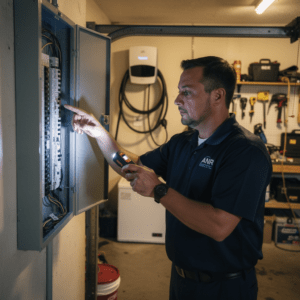
At ANR Electric, we’ve been providing expert electrical services to Akron, Summit County, and Northeast Ohio since 2011. Our licensed electricians stay current with all code requirements and can help ensure your home has proper GFCI protection.
We offer:
- Comprehensive electrical safety assessments
- GFCI outlet installation and replacement
- Testing and troubleshooting of existing GFCI outlets
- Full compliance with current Ohio electrical codes
- Expertise with both modern and historic Northeast Ohio homes
Whether you’re remodeling, experiencing GFCI issues, or want to upgrade your home’s electrical safety proactively, our team can provide the professional service you need.
Don’t wait until a home inspection or electrical emergency forces your hand. GFCI outlets are an affordable safety upgrade that protects your family every single day.
Contact ANR Electric today at (330) 644-4454 to schedule your GFCI assessment or request service online.
Frequently Asked Questions About GFCI Outlets
How do I know if my outlet is a GFCI?
GFCI outlets have TEST and RESET buttons right on the outlet itself, usually between the two plug receptacles. If you see these buttons, it’s a GFCI. Regular outlets just have the plug holes with no buttons.
Can one GFCI outlet protect other outlets?
Yes! One GFCI outlet can protect other regular outlets that are “downstream” on the same circuit. This means you might have standard-looking outlets in your bathroom that are actually protected by a GFCI outlet installed earlier on that circuit. To check if an outlet is protected, plug in a lamp and press the TEST button on the GFCI—if the lamp turns off, that outlet is protected.
How often should I test my GFCI outlets?
Test them once a month. Just plug something in, press the TEST button, make sure the device turns off, then press RESET. It takes 30 seconds per outlet. If the TEST button doesn’t shut off power, the GFCI has failed and needs to be replaced immediately.
Why does my GFCI keep tripping?
If your GFCI trips occasionally, it’s doing its job—protecting you from a ground fault. Common causes include moisture in the outlet, a faulty appliance, damaged extension cords, or legitimate electrical problems the GFCI is catching. If it trips frequently, don’t ignore it—call an electrician to find out why.
Do I need GFCI outlets in my older home if I’m not doing renovations?
Generally no—you’re not required to upgrade unless you’re doing electrical work. However, it’s a smart safety investment even if not required. GFCI outlets are inexpensive (around $15-40 each) and can save your life. Many homeowners choose to upgrade voluntarily, especially in high-risk areas like bathrooms and kitchens.
Can I install GFCI outlets myself?
While GFCI outlets are sold at hardware stores, installation involves working with live electricity, which can be dangerous. Unless you have electrical experience, hire a licensed electrician. Improper installation can leave you without protection, and in many areas, DIY electrical work may violate local codes or void your insurance.
My refrigerator keeps tripping the GFCI. Should I just plug it into a regular outlet?
No—never bypass GFCI protection. If your refrigerator trips the GFCI, either the fridge has an electrical problem that needs repair, or the GFCI itself is overly sensitive. Call an electrician to diagnose the issue. With current codes, kitchen appliances must have GFCI protection.
Will GFCI outlets work during a power outage?
No—GFCI outlets need electricity to function. During a power outage, they won’t provide protection because there’s no power flowing through them. Once power is restored, they resume normal operation automatically.
Quick Reference: GFCI Requirements Checklist
Use this checklist to verify GFCI protection in your Akron home:
Kitchen
- [ ] All countertop outlets
- [ ] Refrigerator outlet
- [ ] Microwave outlet
- [ ] Dishwasher outlet
- [ ] Any other kitchen outlets
Bathrooms
- [ ] All bathroom outlets
- [ ] Outlets near vanities
- [ ] Outlets within 6 feet of tubs/showers
Laundry Room
- [ ] Washing machine outlet
- [ ] Dryer outlet (if electric)
- [ ] Any other laundry room outlets
Garage
- [ ] All garage outlets
- [ ] Workbench outlets
- [ ] Ceiling outlets
- [ ] Freezer/garage door opener outlets
Basement
- [ ] All basement outlets (finished or unfinished)
Outdoor Areas
- [ ] All outdoor outlets
- [ ] Pool/hot tub outlets
- [ ] Deck/patio outlets
Other Areas
- [ ] Any outlet within 6 feet of a sink
- [ ] Crawl space outlets
- [ ] Wet bar outlets
- [ ] Detached structure outlets
Monthly Testing
- [ ] Test all GFCI outlets monthly
- [ ] Replace any that fail testing
This article provides general information about GFCI outlet requirements under the 2023 National Electrical Code as adopted in Ohio. For specific questions about your home’s electrical system, consult with a licensed electrician. ANR Electric serves Akron, Canton, Cuyahoga Falls, Hudson, Stow, and surrounding communities throughout Northeast Ohio.