Somebody quoted you $1,900. Somebody else quoted you $4,800. Same house, same panel, same request. Neither electrician was trying to rob you.
That gap is the single most confusing thing about pricing an electrical panel upgrade, and it exists because the phrase covers at least three genuinely different jobs. Swapping a panel is not the same as upgrading a service. Upgrading a service is not the same as relocating a meter and running new conductors from the pole. All three get called “a panel upgrade” on the phone.
At ANR Electric, we have been replacing panels in Akron, Green, Hudson, and across Northeast Ohio since 2011, in everything from 1920s Highland Square four-squares to new builds in Green. This guide breaks down what an electrical panel upgrade actually costs here in 2026, which version of the job you probably need, what the 2023 code requires that most quotes leave out, and how to read three wildly different bids.
The Three Jobs People Call an Electrical Panel Upgrade
Before you can compare electrical panel upgrade prices, you have to know which job you are pricing.
Job 1: Panel replacement, same amperage.
Your 200-amp service is fine. The panel itself is the problem, whether that is a recalled brand, corroded bus bar, or no space left for a breaker. New panel, same service size, same location, same conductors. This is the cheapest version of an electrical panel upgrade.
Job 2: Service upgrade, 100 amps to 200 amps.
The service itself is undersized. This means a new panel plus new service entrance conductors, a new meter base, a new grounding electrode system, and coordination with Ohio Edison for a disconnect and reconnect. This is what most people mean when they say electrical panel upgrade, and it is the most common job we do.
Job 3: Service upgrade with relocation or a mast rebuild.
Same as job 2, plus the panel or meter moves, or the overhead mast has to be rebuilt, or the service goes from overhead to underground. Add trenching, drywall, and sometimes a second inspection.
If two quotes are $3,000 apart, there is a very good chance one bid job 1 and the other bid job 2. Ask which.
Electrical Panel Upgrade Cost in Akron: 2026 Numbers
Here is what an electrical panel upgrade actually runs in the Akron market this year, installed, permit included.
| Job | Typical installed cost |
|---|---|
| Panel replacement, 200A to 200A, same location | $1,400 to $2,600 |
| Service upgrade, 100A to 200A | $2,500 to $4,500 |
| Service upgrade with meter relocation or mast rebuild | $4,000 to $7,000 |
| 400A service, large home or shop | $6,500 to $12,000 |
| Subpanel addition (garage, addition, basement) | $900 to $2,200 |
National data lands in the same neighborhood. Contractor cost surveys put a 100-amp to 200-amp electrical panel upgrade broadly between $1,300 and $3,000 for the panel work alone, with full service upgrades running higher once conductors, meter base, and utility coordination are included.
What moves your electrical panel upgrade number inside those ranges:
- Whether the utility has to disconnect. A service upgrade requires Ohio Edison to pull the meter and reconnect. That is scheduling, not just labor.
- Overhead versus underground service. Underground is more expensive to modify.
- Aluminum service entrance conductors. If the existing feeders are aluminum and undersized, they get replaced, and that is copper priced by the foot.
- Grounding. Older Akron homes frequently have a grounding electrode system that no longer complies. New ground rods, a bonding jumper at the water main, and sometimes a supplemental electrode are part of the job.
- Finished basement. If the panel is behind finished wall, somebody is patching drywall.
- Circuit count. A 20-circuit panel and a 42-circuit panel are not the same material cost, and neither is landing 18 versus 34 existing circuits.
What the 2023 Code Adds to Every Electrical Panel Upgrade in Ohio
This is the line item that surprises people, and it is the reason a 2026 quote is higher than the number your neighbor paid in 2019.
Ohio’s Residential Code incorporates the 2023 National Electrical Code. Under NEC Article 230.67, every dwelling unit service is required to have a Type 1 or Type 2 surge protective device installed as part of the service equipment or immediately adjacent to it. And critically, the article states that where service equipment is replaced, all of the requirements of the section apply.
Translation: if you replace your service panel in Ohio, whole-home surge protection is no longer optional. It is code.
That adds roughly $250 to $500 to an electrical panel upgrade depending on the device, and it is not an upsell. If a quote does not have it, either the contractor forgot it or they are planning to add it after you sign. We cover what these devices actually do in our guide to whole home surge protection.
Other 2023 code items that commonly show up on a panel upgrade in Northeast Ohio:
- Emergency disconnect. Services now generally require an exterior emergency disconnect means, which is often a separate outdoor enclosure.
- AFCI protection. Circuits that get relanded have to meet current arc-fault requirements, which means AFCI breakers rather than standard ones. AFCI and dual-function breakers cost several times what a standard breaker costs, and a 30-circuit panel full of them is real money.
- Grounding and bonding. Current requirements for the grounding electrode system, intersystem bonding, and water pipe bonding are stricter than what is in most older Akron homes.
Signs You Actually Need an Electrical Panel Upgrade
Not every old panel needs to come out. Here is how to tell the difference between “someday” and “now.”
Replace it now:
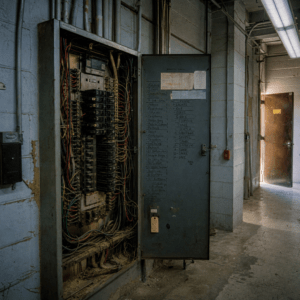
- Federal Pacific Stab-Lok, Zinsco, or Challenger panel. These brands have documented histories of breakers failing to trip under fault conditions. Many insurance carriers will not write a policy on a home with one. If you have one of these, this is the whole conversation.
- Burn marks, scorching, or a hot panel cover. Stop reading and call someone.
- A buzzing or crackling panel. That is arcing.
- Rust or moisture inside the enclosure. Corroded bus bars fail unpredictably.
- Double-tapped breakers throughout. Two conductors landed on a breaker rated for one is a common shortcut that creates loose connections.
Plan for it:
- 60-amp or 100-amp service in a home with central air, electric range, or electric water heating. You are living at the ceiling.
- No open breaker spaces. Tandem breakers and a full panel mean the next project has nowhere to go.
- Fuses instead of breakers. Fuse panels are not inherently unsafe when maintained, but they are almost always attached to a service too small for modern use.
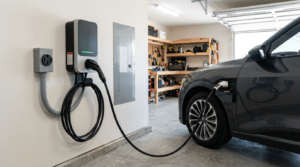
- You are adding a major load. Hot tub, EV charger, heat pump, shop, or finished basement. Each of these is a load calculation question first.
- Breakers that trip repeatedly. Sometimes the panel is the problem, sometimes it is not. Our post on why circuit breakers keep tripping walks through the difference.
The safety stakes are not abstract. The National Fire Protection Association reports that U.S. fire departments respond to an average of 35,150 home fires a year involving electrical distribution and lighting equipment, causing roughly 490 deaths, 1,200 injuries, and $1.3 billion in direct property damage annually.
Electrical Panel Upgrade Permits and the Utility in Summit County
An electrical panel upgrade is permitted work in Ohio. There is no gray area.
For homes inside Akron city limits, electrical permits are issued by the Summit County Department of Building Standards at 1030 East Tallmadge Avenue, not by the City of Akron. Summit County provides residential plan review and inspection for 22 jurisdictions and commercial services for 23.
Permit fees are set by the county and scale with the scope of the work, so a straight panel swap and a full service upgrade are not the same number. Whatever the county charges, the permit line on your quote also covers the application, the service diagrams, the scheduling, and the time spent meeting the inspector. That administrative work is a real part of what you are buying when a contractor pulls the permit for you.
The sequence on an electrical panel upgrade looks like this:
- Contractor pulls the electrical permit
- Ohio Edison is notified and schedules the disconnect
- Panel, meter base, conductors, and grounding are installed, usually in one day
- County inspector approves the work
- The utility reconnects and the county authorizes power turn-on
Your power is off for most of a working day. Plan for it: move anything critical out of the freezer, and if someone in the home relies on powered medical equipment, tell your electrician during the estimate, not the morning of.
What About Tax Credits and Rebates?
Short answer for 2026: the federal money that covered electrical panel upgrade work is gone.
The Section 25C Energy Efficient Home Improvement Credit previously allowed up to $600 for electrical components supporting residential energy property, including panelboards, subpanelboards, branch circuits, and feeders rated at 200 amps or more. Per the IRS, that credit applied to property placed in service before December 31, 2025. An electrical panel upgrade completed in 2026 does not qualify.
Utility programs shift year to year, so it is worth a call to Ohio Edison before you schedule, particularly if the panel upgrade is paired with a heat pump or another efficiency measure. But budget as though there is no rebate, because federally there is not.
How to Read Three Different Electrical Panel Upgrade Quotes
Put the electrical panel upgrade bids side by side and check for these seven things. Whichever quote is missing them is not actually cheaper.
- Service size in and out. “100A to 200A” or “200A to 200A.” If the quote does not say, it is not a quote.
- Permit and inspection, itemized. Not “customer to obtain.”
- Surge protective device. Required by 230.67 on service replacement. Should be listed.
- Meter base and service entrance conductors. Included or excluded, in writing.
- Grounding electrode system. New ground rods and bonding, or reuse of existing.
- Breaker type and count. AFCI and dual-function breakers versus standard. This alone can swing a bid by $600.
- Drywall and finish repair. Almost always excluded. Know that going in.
And one non-line-item: verify the contractor’s license. Ohio licenses electrical contractors through the Ohio Construction Industry Licensing Board, and the OCILB eLicense Center lets you look up any electrical contractor by name in about a minute.
Frequently Asked Questions
How much does an electrical panel upgrade cost in Akron?
A straight panel replacement at the same amperage typically runs $1,400 to $2,600 installed. A 100-amp to 200-amp service upgrade generally runs $2,500 to $4,500, since it includes new service entrance conductors, a meter base, grounding, and utility coordination. Meter relocation, mast rebuilds, or 400-amp services push higher.
How long does a panel upgrade take?
Most residential service upgrades are completed in a single day, roughly six to ten hours on site. Your power will be off for most of that time because the utility has to disconnect and reconnect the meter. From permit application to final inspection, plan on one to three weeks total.
Do I need a permit to replace an electrical panel in Ohio?
Yes. Panel and service work requires an electrical permit and an inspection. In Akron, permits are issued by the Summit County Department of Building Standards rather than the city. Fees are set by the county and scale with the scope of the work, and a contractor’s permit line also covers filing, scheduling, and meeting the inspector.
Is 100-amp service enough for a modern home?
It can be, in a smaller home with gas heat, a gas range, and a gas water heater. It usually is not once you add central air conditioning, an electric range, electric water heating, a hot tub, or an EV charger. The answer is a load calculation based on your square footage and actual appliances, not a rule of thumb.
Does a Federal Pacific panel need to be replaced?
It should be evaluated by a licensed electrician promptly. Federal Pacific Stab-Lok panels, along with Zinsco and Challenger, have documented histories of breakers failing to trip during a fault. Many insurance carriers decline coverage or require replacement. If you have one, treat replacement as a priority rather than a maintenance item.
Will a panel upgrade lower my electric bill?
Not directly. A panel distributes power, it does not consume it, so replacing one does not reduce usage. What it can fix is the underlying problem, since failing connections, undersized conductors, and overloaded circuits waste energy as heat. Our post on electrical problems driving up Akron electric bills covers where the real savings are.
Find Out Which Job You Actually Need
The difference between a $1,900 quote and a $4,800 quote is almost never the electrician. It is which of the three jobs you are buying, and most homeowners do not find that out until the bids come back and confuse them.
ANR Electric has been handling panel and service work across Northeast Ohio since 2011. We will look at your service, run a real load calculation, tell you whether an electrical panel upgrade is urgent or something to plan for, and put every line item in writing so you can compare it against anything else on your kitchen table.
Or call (330) 644-4454. We serve Akron, Green, Hudson, Fairlawn, Macedonia, Richfield, Kent, Canton, Medina, Wooster, and Alliance, with 24-hour emergency service available. Browse all of our residential electrical services.